Thursday, 27 August 2026

Welsh Histories


Here is a Welsh alphabet poster titled "Y Wyddor" ("The Alphabet") which dates all the way back to 1900.
The contents of the poster is based on the alphabet of the great antiquary T.C. Evans of Llangynwyd (unrelated but a home of the Mari Lwyd). It was also illustrated by his son, Christopher Evans... and I think he did a fine job!
The poster was a staple of Glamorgan schools throughout the early twentieth century, a time of mini revival for the Welsh language within classrooms following the previous Draconian measures (such as the Welsh Not) to eradicate it in the preceding decades and centuries.
(Image Credits: Amgueddfa Cymru)


Fame


How to behave


Dogs


“Dogs die. But dogs live, too. Right up until they die, they live. They live brave, beautiful lives. They protect their families. And love us. And make our lives a little brighter. And they don't waste time being afraid of tomorrow.”
Dan Gemeinhart - The Honest Truth.


Dog lessons


The Higher Self


Collective Nouns


Garden Frittata with Goat Cheese & Potatoes


Garden Frittata with Goat Cheese and Potatoes


https://www.newyorkrecipe.com/garden-frittata-goat-cheese-potato-recipe/?fbclid=IwY2xjawT9diFwZG9mBWV4dG4DYWVtAjEwAGJyaWQRMW9qVVVYRDZObXVjTmtUelhzcnRjBmFwcF9pZBAyMjIwMzkxNzg4MjAwODkyAAEeAHeOTTQYPJaw1BX73q2-mmm0mbuj6qLQFOqvOP_xFKxKNfEcMYFCwwtv3gA_aem_3LBGSplZaU_EpoyuH3dENQ#tasty-recipes-1401-jump-target


  • Ingredients

  • 1 tbsp olive oil
  • Kosher salt, to taste
  • 6 oz fingerling potatoes, thinly sliced
  • 4 oz peas (fresh or frozen)
  • ½ fennel bulb, cored and thinly sliced
  • 1 scallion, thinly sliced
  • 2 oz spinach
  • 6 large eggs
  • ¼ cup whole milk
  • 2 oz goat cheese, crumbled
  • 2 tsp minced chives
  • Freshly cracked black pepper, to taste
  • A handful of fresh arugula (for garnish)
  • Thinly sliced red onion (for garnish)

Instructions

  1. Preheat the Oven: Preheat your oven to 375°F (190°C). Heat an 8-inch cast-iron skillet over medium heat and add the olive oil.
  1. Cook the Potatoes: Add the sliced potatoes with a pinch of salt. Cook in a single layer, stirring occasionally, until golden, crispy, and tender — about 6 minutes. Transfer to a plate.
  2. Blanch the Peas: Meanwhile, bring a small saucepan of water to a boil. Blanch the peas for 2 minutes, then transfer to an ice bath. Drain and set aside.
  3. Sauté the Vegetables: In the same skillet, add a little more olive oil if needed. Sauté the fennel for about 3 minutes until lightly caramelized. Add the scallions and cook for 1 more minute. Stir in the spinach, season with salt, cover, and let wilt for 30 seconds.
  4. Combine Everything: Return the cooked potatoes and peas to the skillet. Stir everything together evenly.
  5. Whisk the Eggs: In a medium bowl, whisk together the eggs, milk, and about 1 teaspoon salt until well combined.
  6. Cook the Frittata on the Stove: Pour the egg mixture into the skillet over the vegetables. Let sit over low heat for 1–2 minutes without stirring. Dot the goat cheese evenly on top.
  7. Bake the Frittata: Transfer the skillet to the preheated oven and bake for 10–12 minutes, or until the eggs are fully set and the center is firm.
  8. Garnish and Serve: Remove from the oven and let cool slightly. Top with minced chives, freshly cracked pepper, fresh arugula, and thinly sliced red onion. Slice and serve warm.

Mixed berries Ice Cream


Zero carbs! You can eat as much as you like, and it helps you dry out! Delicious without flour, easy and quick...
Ingredients
Mixed berries Ice Cream recipe
Ingredients
- 2 cups nonfat Greek yogurt (plain)
- 1 cup fresh or mixed berries
- ¼ cup honey or agave syrup (adjust to taste)
- 1 tsp vanilla extract
- Optional: a splash of lemon juice for extra zing


Reactive Dogs


Albert Camus


“You are why I am here.”
That was the sentence Albert Camus wrote to his primary school teacher days after winning the Nobel Prize.
The letter moved many to tears and inspired millions more.
On November 7, 1913, in Mondovi, Algeria, Albert Camus was born into the kind of poverty that usually defines how a life will end.
But his teacher, Louis Germain, saw something in him.
Although ten-year-old Albert barely spoke, when he put pen to paper, the sentences came out with a strange clarity, almost too sharp for a boy his age.
Of course, his home had no books and his father, Lucien, was a poor agricultural worker who was sent to fight when the First World War broke out.
He was killed at the First Battle of the Marne before Albert turned one. The boy would grow up without ever remembering his father’s face.
His mother, Catherine, could not read or write. She was partially deaf and worked as a cleaning woman in the homes of wealthy French colonials. Every day, she scrubbed floors in houses that had more books in a single room than her sons would see in their entire childhood.
Then she would return to a cramped apartment in the district of Belcourt: two small boys, a strict grandmother who never believed in education, a partially paralyzed uncle, no running water, no electricity, no privacy, and no hope.
By every measure that mattered in 1920s colonial Algeria, Albert Camus had no future.
In that part of the world, education usually ended at fourteen for children like him. That was the year you were supposed to leave school and go earn money.
But one teacher refused to let that happen.
Louis Germain believed intelligence had nothing to do with wealth. He had spent years teaching poor children who usually disappeared into factories and docks. He knew what the pattern looked like.
And he knew when someone was about to break it.
Albert was quiet and small for his age, but when he wrote, there was a clarity that made his teacher marvel.
So Germain did something simple and radical.
He stayed every day after school and tutored the boy for free. He prepared him for the scholarship exam that would allow him to attend secondary school.
And when Albert’s family hesitated and insisted he needed to work and start earning money, Germain went to their apartment himself.
He stood in that small, dim room and argued for a future that no one there had ever seen.
Catherine reluctantly agreed.
In 1924, Albert took the scholarship examination for the Grand Lycée in Algiers.
He passed.
He became one of the very few poor children in his neighborhood to advance beyond primary school.
He wore secondhand clothes and often went without lunch. But he studied with a ferocious intensity because he understood something most children never have to:
This was his only door. And he did not let it close.
Years later, he would write The Stranger. Then The Plague. Then The Myth of Sisyphus.
He would become one of the defining voices of the twentieth century, asking questions about justice, suffering, and how to live in a world that makes no promises.
Who would have thought his books would sell in the millions? That they would be translated across continents? That in lecture halls and cafés, intellectuals would debate his philosophy of the absurd and his insistence on moral rebellion?
All of it written in that sharp, bone-dry, almost transparent style that became his signature.
People often wonder why he wrote the way he did. Camus wasn’t writing to impress anyone.
He said he wrote in plain, simple language because of his mother.
He wanted to write in a language that would not feel like a stranger to the silent, illiterate woman waiting in the Belcourt apartment.
In 1957, at forty-four, he stood in Stockholm and accepted the Nobel Prize in Literature, becoming one of the youngest recipients in history.
The first letter he wrote afterward was not to a publisher or a critic.
On November 19, 1957, he wrote to Louis Germain.
“Without you,” he said, “none of this would have happened.”
And that was not sentiment. It was a fact.
Three years later, on January 4, 1960, Albert Camus died in a car crash. He was forty-six.
It happened on a rainy road.
In his pocket was an unused train ticket. He had originally planned to travel by train, but at the last minute he accepted a friend’s offer for a ride.
In the mud near the wrecked car, investigators found his briefcase.
Inside it was the manuscript of an unfinished novel: The First Man.
It was a book he had dedicated to his mother.
NB:
If you’re curious about the full letter Albert Camus wrote to his teacher Louis Germain, here it is:
Dear Monsieur Germain,
I let the commotion around me subside a bit before speaking to you from the bottom of my heart. I have just been given far too great an honour, one I neither sought nor solicited. But when I heard the news, my first thought, after my mother, was of you.
Without you, without the affectionate hand you extended to the small poor child that I was, without your teaching and example, none of all this would have happened.
I don’t make too much of this sort of honour. But at least it gives me the opportunity to tell you what you have been and still are for me, and to assure you that your efforts, your work, and the generous heart you put into it still live in one of your little schoolboys who, despite the years, has never stopped being your grateful pupil.
I embrace you with all my heart.
Albert Camus.

Most expensive sales from April to June 2026


From Tolkien's Middle-earth to the birth of modern economics: Literary treasures across three centuries

This quarter's top ten spans iconic novels, fine art, and foundational scholarly works across three centuries. From fantasy and science fiction to private press editions and the texts that shaped modern language and economic thought, these sales reflect the extraordinary breadth of rare book collecting.

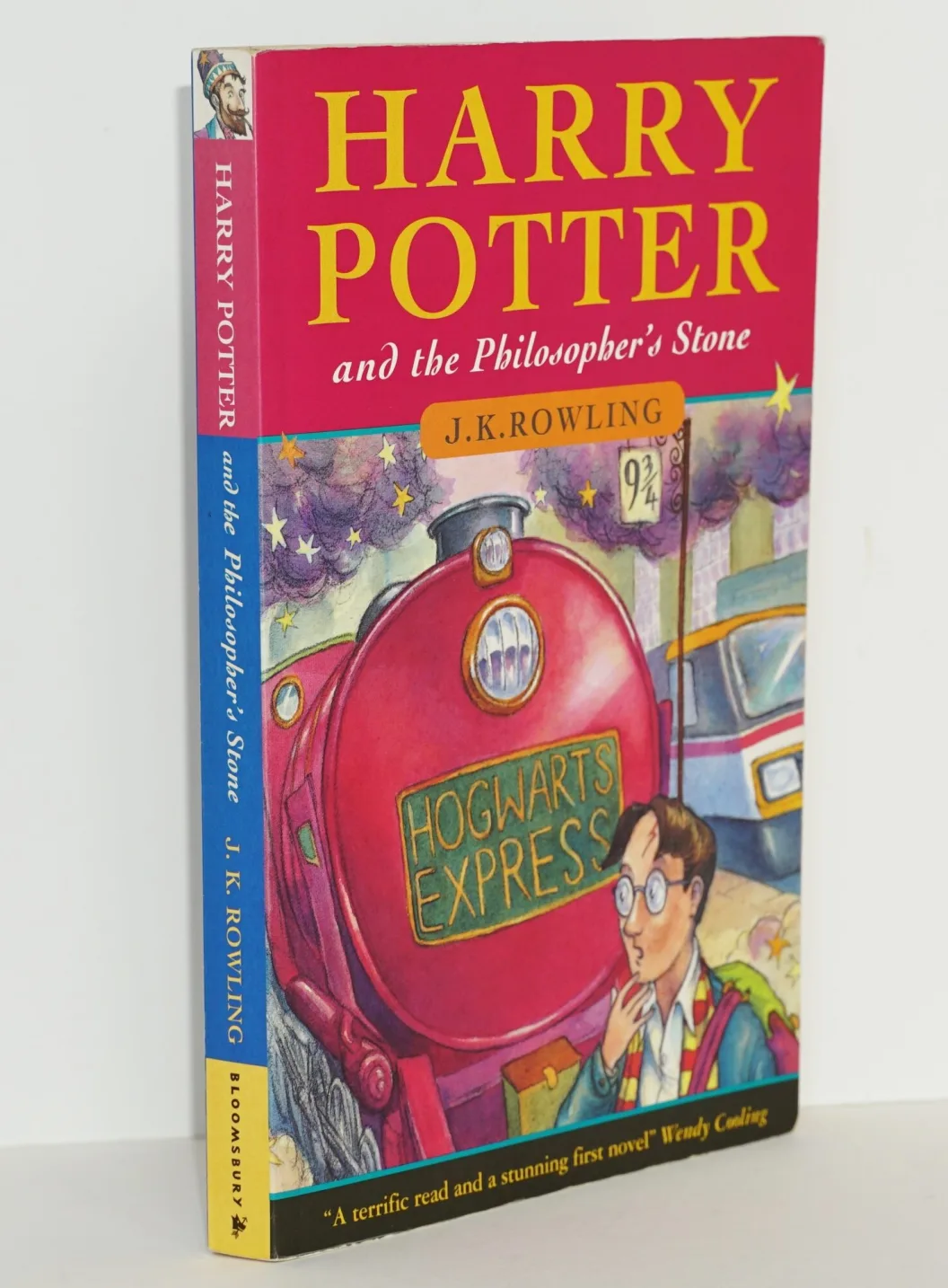
Harry Potter and the Philosopher's Stone by J.K. Rowling - £22,300

Harry Potter and The Philosopher's Stone first edition second printing softcover
First edition softcover with Thomas Taylor's iconic Hogwarts Express illustration, showing vibrant unfaded colors and the Wendy Cooling review quote at the base

This exceptional first edition, second printing softcover from Bloomsbury is among the scarcest Harry Potter copies in existence. With a complete number line down to 1, the Wendy Cooling review on the front board, and the characteristic "Joanne Rowling" credit, it ticks every collector's box.

The fine condition is remarkable: unfaded spine colors, tight binding, and pristine interior pages with no marks or inscriptions. Formerly in the stock of Peter Harrington, this copy appears virtually unread.

Sold by Meier And Sons Rare Books

The title that launched a transformative series in the genre of young adult literature, captivating an entire decade of youth. This copy is a remarkable example.
Meier And Sons Rare Books
Lisa Meier (Meier And Sons Rare Books)

The Hobbit by J.R.R. Tolkien - £20,900

The Hobbit by J.R.R. Tolkien
Original green cloth binding with Tolkien's own dark green pictorial design of mountains and a dragon, published by George Allen & Unwin Ltd.

One of just 1,500 copies from the 1937 first printing, this copy retains its original green cloth with Tolkien's distinctive dark green pictorial stamping.

Though lacking the dust jacket and showing honest signs of age, the binding remains intact. Owner bookplates on the front endpapers add a trace of provenance. A rare survivor of one of the 20th century's most beloved fantasy novels in its earliest form.

Sold by Burnside Rare Books

Original Pencil Portrait Drawing of Professor Challenger by Sir Arthur Conan Doyle - £16,800

Professor Challenger by Sir Arthur Conan Doyle
Pencil sketch of Professor Challenger by Arthur Conan Doyle (1913), with handwritten annotation by Lady Jean Conan Doyle identifying the subject

The only known portrait of Professor Challenger drawn by his creator, sketched while Doyle was writing The Lost World. The lined notebook paper bears a caption by Lady Jean Conan Doyle identifying the subject. Doyle famously immersed himself in this character, even posing in costume as Challenger for the novel's frontispiece photograph.

With provenance tracing from the Conan Doyle family through Christie's London, this drawing offers a unique glimpse into the imagination behind one of literature's most vivid fictional scientists.

Sold by James Pepper Rare Books, Inc.

A Dictionary of the English Language by Samuel Johnson - £14,000

A Dictionary of the English Language by Samuel Johnson
Spines of the two folio volumes in contemporary calf, showing gilt-lettered red and black morocco labels: Vol. I (A–K) and Vol. II (L–Z)

This true first edition of Johnson's landmark 1755 dictionary stands as the greatest one-man achievement in English lexicography.

Across two tall folio volumes, Johnson defined some 40,000 words, illustrating their meanings through quotations from the finest English writers.

Unlike modern dictionaries aimed at clinical precision, Johnson's work rewards the curious reader with wit, opinion, and literary depth.

Bound in contemporary calf with contrasting red and black morocco spine labels, this is a handsome, near fine copy of a monument in the history of the English language.

Sold by Charles Agvent, est. 1987

A massive undertaking and result, Johnson's dictionary was important in a number of ways, not the least in its use of quotes to illustrate definitions.
Charles Agvent
Charles Agvent

The Hobbit by J.R.R. Tolkien - £13,600

The Hobbit by J.R.R. Tolkien
Tolkien's color plate 'Conversation with Smaug,' one of the illustrations first included in this 1937 second impression

Notable as the earliest version to include Tolkien's color illustrations, this first edition second impression was originally commissioned for the American edition. Only 2,300 copies were printed in 1937, with over 400 destroyed during the London Blitz.

This copy has been finely rebound in full green morocco with a gilt dragon on the front board and all edges gilt, housed in a custom clamshell box. It retains the original map endpapers and the two-page advertisement leaf at the rear.

Sold by Louis88Books

Robinson Crusoe (complete set) by Daniel Defoe - £13,000

Robinson Crusioe (complete set) by Daniel Defoe
Three volumes in period paneled calf with gilt-titled spines, shown alongside the title page of the stated second edition (1719)

All three volumes of Defoe's Robinson Crusoe series survive here in early editions, bound in full period paneled calf. The first volume is a stated second edition, called for just seventeen days after the April 1719 first publication.

Each volume carries its own engraved illustration: a frontispiece portrait of Crusoe, a folding world map, and a folding view of his island. Often called the first English novel, Crusoe's story of survival and self-reliance has inspired literature from adventure tales to modern science fiction.

Sold by Raptis Rare Books

Dune by Frank Herbert - £13,300

Dune by Frank Herbert
First edition in the original Chilton dust jacket with John Schoenherr's atmospheric cover art, alongside the iconic dune-shaped title page

Published by Chilton — better known for auto repair manuals — at the steep price of $5.95, Herbert's science fiction masterpiece initially sold poorly. It went on to tie for the 1966 Hugo Award and win the inaugural Nebula.

Arthur C. Clarke compared it only to The Lord of the Rings for depth and world-building. This copy retains the first-issue dust jacket and the two-page map of Arrakis, in very good plus condition with bright, clean cloth.

Sold by James Cummins Bookseller

The Defence of Guenevere and Other Poems by William Morris (Kelmscott Press) - £11,200

The Defence of Guenevere and Other Poems by William Morris (Kelmscott Press)
Doves Bindery green morocco with gilt floral tooling, shown with the opening page featuring Kelmscott Press borders, red title, and ornamental initial

Printed by the Kelmscott Press in red and black with elaborate borders and decorative initials, this edition of Morris's debut poetry collection is bound in full dark green morocco by the celebrated Doves Bindery (stamp-signed 1896).

Morris's poem reimagines Queen Guenevere's trial for adultery from her own perspective, drawing on Malory's Le Morte D'Arthur to explore passion, loyalty, and desire. A beautiful marriage of fine printing and fine binding, in near fine condition.

Sold by Whitmore Rare Books, Inc.

T.J. Cobden-Sanderson, the founder of both the Doves Bindery and the Doves Press, was a longtime collaborator of Kelmscott Press founder William Morris. Many Kelmscott publications, including the famous Kelmscott Chaucer, were bound by Cobden-Sanderson. This copy represents not just the outstanding craft of the Kelmscott Press but also the creative partnership between Morris and one of his most trusted collaborators. Morris's poem reimagines Queen Guenevere's trial for adultery from her own perspective, drawing on Malory's Le Morte D'Arthur to explore passion, loyalty, and desire. A beautiful marriage of fine printing and fine binding, in near fine condition. Whitmore Rare Books is proud to stock fine bindings from a variety of celebrated English binderies including the Doves Bindery, Riviere, and Zaehnsdorf, as well as Kelmscott Press publications and other fine press material.
Dan Whitmore (Whitmore Rare Books, Inc.)

An Inquiry into the Nature and Causes of the Wealth of Nations by Adam Smith - £11,200

An Inquiry into the Nature and Causes of the Wealth of Nations by Adam Smith
Three octavo volumes in contemporary calf with gilt-titled red and green morocco spine labels and gilt floral tooling

Published in Dublin in 1776, shortly after the London first, these three octavo volumes are bound in full contemporary calf with gilt titles and bear the signature of Sir Richard Frankland of Ashgrove.

Smith's arguments for free trade, market-driven pricing, and limited government intervention reshaped political economy and remain foundational to modern thought. Complete sets of this Dublin printing are exceptionally scarce on the market today.

Sold by Jen's Rare Books

Autograph letter signed by Johannes Agricola - £10,700

Autograph letter signed by Johannes Agricola
Handwritten letter by Johannes Agricola, showing the reformer's distinctive script

This extremely rare autograph letter by Johannes Agricola (1494-1566), Martin Luther's close associate and fellow reformer, dates from the mid-sixteenth century. Written to a mayor regarding legal documents and a dispute involving one "von Holzendorff," the letter offers a glimpse into the administrative life of a key Reformation figure. Closing with a warm "I wish you a good morning," it reveals Agricola's personal voice beyond his theological writings.

Sold by Antiquariat INLIBRIS Gilhofer Nfg. GmbH


https://www.abebooks.co.uk/books/rarebooks/most-expensive-sales-april-may-june-2026