Friday, 30 June 2017

How to Recognize & Embrace our Inner Seasons


Via Gillian Sanger
on Jun 25, 2017
get elephant's newsletter


To ebb and flow is to be in harmony with the rhythmical pattern of coming and going.

It’s the transition between retreat, regrowth, and back again.
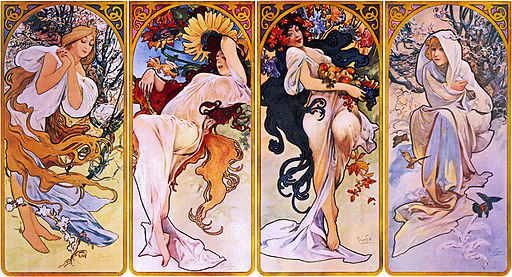
We see it in the tides—water rising to soothe the shore and then out it goes again. It comes in the seasons—transitioning between birth, growth, blossom, death, hibernation, and rebirth. We learn to embrace these things, accepting them as natural phenomena. We find beauty in each season, knowing that each holds a purpose—some sprinkling of magic—that is somehow inaccessible within the others.
Ebb and flow occurs within us too, yet these transitions often leave us feeling sore and sensitive. As humans with incredible complexity within our inner worlds and in relation to our outer one, we experience comings and goings on a consistent basis. Rhythms live within our desires, our relationships, our yearnings, our creative callings, our mood, our need for space, and our cravings for companionship. Sometimes things flow and sometimes they ebb. To ebb—to recede—is often a painful and challenging place to sit in. To flow—to move forward—can present its own challenges as we face new life. It is here, in flow, that we must learn to say our difficult goodbyes.
As creatures subject to the same laws of nature as the waters and wild flowers, can we learn to embrace all phases of any cycle? The comings and the goings, the deaths and the rebirths, and the confusion that rests between each transition? How might we live in greater harmony with the changes we face?
Find stillness.
Despite the changes we are faced with, there rests an underlying stillness that is always available to us. We might find it at the edge of the dock, legs crossed, eyes staring out across a lonely lake at dawn. We might find it with our back on the floor (or on the mat), palms up, with our attention brought to our breath and the strength of the floor that holds us. We might find it in a mid-afternoon slumber, curtains drawn shut, body and mind given a trip to dreamland, if only for a half an hour. Wherever we find ourselves, we may choose to find stillness for a moment, reconnecting with the calm beneath the chaos.
Lead with curiosity.
In these moments of instability and insecurity, we can open ourselves to the possibility of meaning—asking questions for purposeful answers. Rather than remaining attached to the past, we can ask questions that lead us to find beauty and reason in the shifts we encounter. For instance: What are we afraid to leave behind? What is there to learn from this experience? What are the positive aspects of this transition? What beauty is ready to be born? Leading with curiosity opens up the opportunity to view our world differently. With preconceived ideas screened at the door of our mind, we find freedom to relate to adversity on a deeper level.
Release judgement.
When we release our expectations for what we should and should not be feeling, thinking, doing, and achieving, we open up space for greater understanding and compassion. Are we attempting to coerce our way out of the physical, emotional, or mental space we find ourselves in? We do not argue with weather in Winter (well, we may try, but we more easily accept its reality than we do the reality of our own dark moments). Our inner landscape is not so different from that of the forest, subject to the same transitions between light and dark, cold and warmth, hibernation and expression. Growth and retreat. Ebb and flow. Here, within our understanding of this fundamental nature, we may grow into our peace again.
As the great poet Mary Oliver puts it:
“Whoever you are, no matter how lonely,
the world offers itself to your imagination,
calls to you like the wild geese, harsh and exciting
over and over announcing your place
in the family of things.”

Author: Gillian Sanger 
Image: Wikimedia Commons
Editor: Danielle Beutell

Green Man

A Green Man is a sculpture, drawing, or other representation of a face surrounded by or made from leaves. Branches or vines may sprout from the nose, mouth, nostrils or other parts of the face and these shoots may bear flowers or fruit.
The Green Man motif has many variations. Found in many cultures from many ages around the world, the Green Man is often related to natural vegetative deities. It is primarily interpreted as a symbol of rebirth, representing the cycle of growth each spring. Some speculate that the mythology of the Green Man developed independently in the traditions of separate ancient cultures and evolved into the wide variety of examples found throughout history.
Although considered pagan, he frequently appears, carved in wood or stone, in churches, chapels, abbeys and cathedrals.

Monday, 26 June 2017

Good Books

Good books are friendly things to own.
If you are busy they will wait.
They will not call you on the phone
Or wake you if the hour is late.
They stand together row by row,
Upon the low shelf or the high.
But if you're lonesome this you know:
You have a friend or two nearby.
The fellowship of books is real.
They're never noisy when you're still.
They won't disturb you at your meal.
They'll comfort you when you are ill.
The lonesome hours they'll always share.
When slighted they will not complain.
And though for them you've ceased to care
Your constant friends they'll still remain.
Good books your faults will never see
Or tell about them round the town.
If you would have their company
You merely have to take them down.
They'll help you pass the time away,
They'll counsel give if that you need.
He has true friends for night and day
Who has a few good books to read.
Edgar Guest
Art Alexandre Honore


Friday, 23 June 2017

The Sea Spirit

I smile o'er the wrinkled blue­
Lo! the sea is fair,
Smooth as the flow of a maiden's hair;
And the welkin's light shines through
Into mid-sea caverns of beryl hue,
And the little waves laugh and the mermaids sing,
And the sea is a beautiful, sinuous thing!
I scowl in sullen guise­
The sea grows dark and dun,
The swift clouds hide the sun
But not the bale-light in my eyes,
And the frightened wind as it flies
Ruffles the billows with stormy wing,
And the sea is a terrible, treacherous thing!
When moonlight glimmers dim
I pass in the path of the mist,
Like a pale spirit by spirits kissed.
At dawn I chant my own weird hymn,
And I dabble my hair in the sunset's rim,
And I call to the dwellers along the shore
With a voice of gramarye evermore.
And if one for love of me
Gives to my call an ear,
I will woo him and hold him dear,
And teach him the way of the sea,
And my glamor shall ever over him be;
Though he wander afar in the cities of men
He will come at last to my arms again.
by Lucy Maud Montgomery
Art Victor Nizovtsev


Over Hill, Over Dale


Over hill, over dale,
Through bush, through briar,
Over park, over pale,
Through blood, through fire,
I do wander everywhere,
Swifter than the moone’s sphere;
And I serve the fairy queen,
To dew her orbs upon the green.
The cowslips tall her pensioners be:
In their gold coats spots you see;
Those be rubies, fairy favours,
In those freckles live their savours:
I must go seek some dewdrops here,
And hang a pearl in every cowslip’s ear.
Farewell, thou lob of spirits; I’ll be gone:
Our queen and all her elves come here anon.
William Shakespeare
(From "Midsummer Night's Dream")
Art John Anster Fitzgerald


British artist uses a century-old technique to create surreal indoor landscape photomontages

The art of matte painting has been around since the beginnings of cinema. This technique enables filmmakers to add objects and surroundings to create the illusion of an environment that is not present at the filming location.
In order to explain what matte painting is, we need to understand the use of the word “matte,” which in visual effects terminology is just a synonym for the word “mask.”
Artists that made matte paintings used paints or pastels on a large sheet of glass that was placed between the camera and the live action. Pioneer filmmaker and visual effects inventor, Norman Dawn, is known as the father of the painted matte composite. He used glass paintings in his 1907 film Missions of California.
Arch (2016)Photo Credit


Eventide (2012)Photo Credit
This early filmmaking technique was an inspiration for the talented  British artist Suzanne Moxhay to create intriguing and complex photomontage images. She combines matte painting, fragments of old photos, photography and digital manipulation in order to create this captivating artwork. As Jessica Stewart wrote for My Modern Met, Moxhay’s landscapes are views into apocalyptic worlds made through photomontage.
Moxhay builds up the image in her studio using cutout fragments of a source material, which she makes into small stage sets on glass panels. Then, she re-photographs the sets and manipulates the images digitally, an act of reprocessing which takes them further away from their original context and broadens the narrative potential.

Feralis (2011)Photo Credit


Antechamber (2014)Photo Credit
…I look for interesting connections between details in photographs of rooms that I’ve either collected or photographed myself and then I use points of connection to build up a larger picture. I’m never quite sure where it’s gonna go initially, but I’d just look for things that can work together, which often is things like the way light could appear to be moving from one image through into another or the way a corner of a room could appear to match with a corner of another room. 
When all these things are put together they create spaces that don’t really make sense… The more you look, the more you realize that it kinda falls apart, said Moxhay.
Byway (2013)Photo Credit
 See more of Moxhay’s captivating artwork, visit her website or her Instagram profile.  
Thicket (2015)Photo Credit
Moxhay traveled a lot in the past and her work is inspired by images of places she’s seen in old travel magazines. “I think I just follow what I’m interested in and I just like the idea that it’s left to the interpretation of the viewer,” the artist says.
She has exhibited widely, both nationally and internationally since 2002 and her work is held in several significant public and private collections.


https://www.thevintagenews.com/2017/03/08/british-artist-uses-a-century-old-technique-to-create-surreal-indoor-landscape-photomontages/

Five Dr. Seuss Quotes to inspire Change


Via Crystal Jackson
on Jan 20, 2017
get elephant's newsletter

Several years ago, I visited an exhibit entitled “Dr. Seuss Goes to War & More.”

I love Dr. Seuss. I grew up with his books, and I love his imagination.
I didn’t realize the part that Dr. Seuss played in the second World War. Theodor Geisel, better known as Dr. Seuss, was more complex than I had ever imagined. He drew political cartoons for a newspaper and created political propaganda during the war with the illustrious Frank Capra.
Even his books have a political message. Yertle the Turtle draws an allegory to Hitler, The Lorax is about environmentalism, The Butter Battle Book is about the arms race and nuclear war, and The Sneetches is about anti-Semitism. Even Horton Hears a Who has political messages tucked inside its whimsical tale.
It’s said that he produced more than 400 political cartoons during wartime.
Dr. Seuss could have simply kept writing children’s stories like One Fish, Two Fish, Red Fish, Blue Fish. He could have been successful without once lifting his pen to object to the injustice that was happening overseas. He was living in America, and it wasn’t impacting him directly.
He could have decided that it was too much trouble or that the backlash from friends and family would be too great. Instead, he chose to use his talent to speak out against fascism, racism, the arms race, the harm being done to the environment, and many other social issues. And each of these issues is still relevant today.
I often wonder what the world might look like if we all used our abilities to make a positive impact.
What would the world be like if we saw an injustice anywhere in the world—and not just in our own backyards—and decided that we were going to do something about it?
If we used the gifts we’ve been given to reach out to help others out of difficult situations, what would that be like?
Dr. Seuss was a writer and illustrator, but he was also a man with a keen sense of justice and personal integrity. He had a message to deliver, and even today his books are dear to children and adults alike.
Read Yertle the Turtle right now, today, and you will easily see the relevance to current events. Here are five Dr. Seuss quotes that remind us to speak out and create the changes we want to see.
  1. “Unless someone like you cares a whole awful lot, nothing is going to get better. It’s not.”
  2. “Why fit in when you were born to stand out?”
  3. “You have brains in your head. You have shoes on your feet. You can steer yourself in any direction you choose.”
  4. “Be who you are and say what you feel because those who mind don’t matter and those who matter don’t mind.”
  5. “A person’s a person, no matter how small.” 
It’s much easier to keep our heads buried in the sand or to simply look the other way. Being outspoken and passionate about social injustice isn’t easy. It certainly seems to invite criticism. But it is essential that we work together to protect human rights. For the first time in 27 years, the Human Rights Watch has identified our President Trump as being a specific threat to human rights:
The United States has a vibrant civil society and strong constitutional protections for many civil and political rights. Yet many U.S. laws and practices, particularly in the areas of criminal and juvenile justice, immigration, and national security, violate internationally recognized human rights. Those least able to defend their rights in court or through the political process—members of racial and ethnic minorities, the poor, immigrants, children, and prisoners—are the people most likely to suffer abuses.
The election of Donald Trump as president in November 2016 capped a campaign marked by misogynistic, xenophobic, and racist rhetoric and Trump’s embrace of policies that would cause tremendous harm to vulnerable communities, contravene the United States’ core human rights obligations, or both. Trump’s campaign proposals included deporting millions of unauthorized immigrants, changing US law to allow torture of terrorism suspects, and “load[ing] up” the Guantanamo Bay detention facility.
President-elect Trump also pledged to repeal most of the Affordable Care Act, which has helped 20 million previously uninsured Americans access health insurance and to nominate “pro-life” Supreme Court justices who would “automatically” overturn Roe v. Wade, which would allow individual states to criminalize abortion. [1]
Many Americans share these concerns. To clarify, the concern isn’t about party politics. It’s specific to potential human rights violations. Those who are eager to protect our freedoms are already organizing, with a historic women’s march planned the day following the inauguration. Other marches and demonstrations are being held across the country and around the globe in a show of solidarity.
Will President Trump infringe on human rights?
Today, climate change, LGBT rights, and healthcare disappeared from the White House web page to be replaced with initiatives like strengthening the military, increasing the police force, and making America the primary concern when it comes to international relations with an emphasis on “peace through strength.”
It doesn’t bode well. In fact, it eerily echoes the types of issues Geisel faced when he began penning war propaganda and political cartoons with his talents as a writer and artist.
Don’t get me wrong—I’d love for President Trump to actually benefit our country in some way and manage to bridge the gap that the election year created. Unfortunately, his inaugural speech was filled with sentiments like “America first” and “America will start winning again.” Apparently, the idea of “winning” is central to his message.
There was even a chilling statement about eradicating Islamic terrorism from the world completely, which echoes Adolf Hitler blaming the Jews for German problems and calling for their eradication; this is particularly disturbing when President Trump has advocated for a Muslim registry during his campaign.
I am in no way confident that he knows the difference between a practicing Muslim and a member of ISIS.
The President of the United States is the highest office in our country, and we must hold the person who takes that office to the standards of all of the presidents before him.
We must make sure that he upholds the Constitution and works to protect basic human rights. Any infringements on those rights should be met with outrage—and not just outrage on the part of the people who he considers his enemies (those who didn’t vote for him or question him or criticize his actions).
A human rights violation should be met with outrage regardless of our party politics, and our words must become action. We must hold our leaders accountable.
It’s imperative that we use whatever gifts we’ve been given to hold him and our other leaders accountable if we want to avoid repeating history.
Theodor Geisel was a writer and cartoonist, and yet he wasn’t content to sit back and watch history take its course without his participation. He fought tirelessly for human rights through his work, and that work still speaks to us today. How can we do any less than follow his example?
References:
[1] Human Rights Watch. “World Report: 2017.” Retrieved January 20, 2017.
~~
Author: Crystal Jackson
Editor: Callie Rushton