Friday, 22 March 2019


Homemade Banana Pupcakes

INGREDIENTS
- 3/4 cup organic buckwheat flour
- 1/4 cup organic coconut flour
- 1 egg
- 1-2 ripe bananas
- 1 teaspoon baking powder
- 1 tablespoon Manuka Honey
- 1/4 cup organic coconut oil
- 1/2 cup water
- Cupcake or mini cupcake pan
DIRECTIONS
- Preheat oven to 150ºC
- Mash banana then add baking powder and honey and mix well. Set aside.
- In another bowl, mix flour with coconut oil, water and egg.
- Stir in banana mix to flour mix.
- Divide evenly into cupcake pan.
- If using regular cupcake pan, bake in oven for 20 – 25 minutes
- If using mini cupcake pan, bake in oven for 15 – 20 minutes
This homemade banana pupcake batter will make 6 – 10 regular size pupcakes or 24 mini pupcakes. You can switch the buckwheat flour and coconut flour for one cup of wholemeal flour if you can’t source them from your local health food store. Store in an airtight container in the fridge for up to one week or in the freezer for up to one month.
Now sit back and watch your pug devour these delicious homemade banana pupcakes. And they really are tasty. Good enough that you can share one with your pug, if they will let you.
This 1785 Dictionary of Vulgar Phrases Is a Hilarious Collection of Bad Words From the Past
Related Video: 20 Historical Words We Should Bring Back
The Cool Kids' Dictionary
"He too was a lexicographer, and his achievements equally extraordinary," British language expert Susie Dent tells BBC Culture. "The two men even shared the same ambition: to record faithfully the English of their day. Yet their focus couldn't have been more different."

The Hero We Didn't Know We Needed
The Other F Word
The 7 strangest theme parks around the world
IF YOU WANT A TRADITIONAL and predictable family vacation, head to Disney World, ride the teacups, and leave with a few mouse-ear hats. However, if you want an experience that isn’t all princesses and cartoon animals, there are plenty of bizarre amusement parks out there to satisfy your craving. From the explicit Loveland in South Korea to Lithuania’s Išgyvenimo Drama, a Soviet-themed park that gives visitors a brutal taste of life in the former USSR, these seven parks might not be the happiest place on earth, but they will certainly make a lasting impression on anyone who visits.


1. Haw Par Villa, Singapore
Photo: Haw Par Villa
Haw Par Villa is technically a theme park, but it’s more like a graphic lesson in morality. This park located Singapore was built in 1937 and is filled with statues and dioramas representative of Asian culture, history, philosophy, and religion meant to give visitors an idea of what a virtuous life should look like. The park is especially famous for its Ten Courts of Hell diorama, a brutal depiction of what supposedly happens to those who stray off the good path. Basically the Chinese folklore version of the Last Judgement and subsequent hell, this diorama shows the after-life punishments for various moral and criminal offenses, like corruption and disrespecting your elders. As you wander through, you will encounter a tax evader being crushed by a pointy stone hammer, and a student being disemboweled by an executioner for cheating on a test — not exactly kid-friendly by today’s standards.
The park is open every day from 9:00 AM to 7:00 PM, and admission is free.
2. Išgyvenimo Drama, Lithuania
Photo: Sovietinis bunkeris/Facebook
Located in Lithuania, Išgyvenimo Drama, or “Survival Drama,” is designed to give visitors the authentic experience of living in a Soviet bunker in the middle of the Lithuanian forest in 1984. Guests are gathered in a genuine bunker, deprived of their personal belongings, made to listen to the Soviet anthem and be barked at, interrogated KGB-style, humiliated, and given a taste of Soviet medicine. The whole experience lasts about three hours, and to participate you must sign a waiver, since disobedience may result in physical or psychological punishment. Needless to say, it’s probably not a great idea to take the kiddos.
The bunker is located 17 miles from the capital city of Vilnius. The exact location can be found on Google Maps. To learn more about the Soviet bunker, check out the official website of the park.
3. Loveland, South Korea
Photo: 제주러브랜드/Facebook
Add Loveland to the list of theme parks that aren’t exactly suitable for children. Located on the island of Jeju in South Korea, Loveland is an erotic sculpture park featuring pieces depicting various sexual acts. According to the website, the park provides a “proper approach to sex culture and it is decorated with a lot of beautiful artworks.” Loveland also has indoor exhibits displaying wooden sculptures of penises, a collection of adult toys, and imaginative art works of sexuality. The park is open year-round, from 9:00 AM to midnight, and adult entry costs about $11 per person.
4. Parque Jaime Duque, Colombia
Photo: Parque Jaime Duque/Facebook
Parque Jaime Duque, one hour outside of Bogota, Colombia, is an odd mix. It’s a theme park with replicas of famous monuments such as the Taj Mahal and the Seven Wonders of the Ancient World; huge sculptures of aircrafts and dinosaurs; decommissioned military ships; a colorful medieval castle; mechanical attractions like a monorail train, bumper cars, and a carousel; a biopark with birds, deer, and primates; and the like. The park is family friendly and, despite featuring a strange assortment of attractions, is educational and a ton of fun for kids. Admission is $34.
5. BonBon-Land, Denmark
Photo: BonBon-Land/Facebook
This place might the closest thing to a real-life, upside-down Willy Wonka’s Chocolate Factory. Located in Holmegaard, Denmark, about 50 miles southwest of Copenhagen, BonBon-Land is a confection-filled dream for kids and very immature adults. The owners of a candy factory decided to open a theme park in 1992 with rides featuring the same wackily named chocolate treats. Seagull droppings, ear wax, and dog farts are among the juvenile sweet treats you’ll find in BonBon-Land, in addition to dozens of rides such as “Dog Fart Rollercoaster” and “The Water Rat.” Imagery around the park is consistently crass, with depictions of vomiting rodents and urinating ants. If you just heard “urinating ants” and thought “sign me up!” then admission costs $23 per person. The park reopens for the season on April 27.
6. Suoi Tien Park, Vietnam
Photo: Suoi Tien Theme Park/Facebook
Suoi Tien Park is a huge theme park 40 minutes away from Ho Chi Minh, Vietnam, with an unusual aesthetic. Although there are the run-of-the-mill theme parks attractions such as water slides, roller coasters, waterfalls, and a ferris wheel, the park is decorated with Vietnamese history and folklore, as well as with Buddhism in mind. There are dragons, Buddha statues, temples, a wishing tree, and arches, but there are also seemingly out-of-place medieval castles and sculptures. One of the park’s most striking (or startling) features is a crocodile farm with about 1,500 crocodiles, which you can actually feed. Park prices can be found on the official website.
7. Weeki Wachee Springs State Park, Florida, USA
Photo: Weeki Wachee Springs/Facebook
The Weeki Wachee Springs State Park in Florida is a spot made for those whose childhood dreams were to be Ariel and live under the sea. There are mermaid shows, including performances of Hans Christian Andersen’s The Little Mermaid, as well as river boat cruises, lazy river floats, kayak and paddleboard rentals, a sandy beach, waterslides, and wildlife shows to fill your days. The mermaids are trained performers who thrill audiences with tricks like eating and drinking underwater. Tickets cost $13 per person from April 18 to November 5, and $8 per person during the rest of the year. 
CHICKEN PICCATA

INGREDIENTS
- 2 skinless and boneless chicken breasts, butterflied and then cut in half
- Sea salt and freshly ground black pepper
- All-purpose flour, for dredging
- 6 tablespoons unsalted butter
- 5 tablespoons extra-virgin olive oil
- 1 clove minced garlic
- 1/3 cup fresh lemon juice
- 1/2 cup chicken stock
- 1/2 cup white wine
- 2 tablespoons brined capers, rinsed
- 1/3 cup fresh parsley, chopped
INSTRUCTIONS
- Season chicken with salt and pepper. Dredge chicken in flour and shake off excess.
- In a large skillet over medium high heat, melt 2 tablespoons of butter with 3 tablespoons olive oil. When butter and oil start to sizzle, add 2 pieces of chicken and cook for 3 minutes. When chicken is browned, flip and cook other side for 3 minutes. Remove and transfer to plate. Melt 2 more tablespoons butter and add another 2 tablespoons olive oil. When butter and oil start to sizzle, add the other 2 pieces of chicken and brown both sides in same manner. Remove pan from heat and add chicken to the plate.
- Immediately add minced garlic to the pan and mix until fragrant. Into the pan add the lemon juice, stock, wine and capers. Return to stove and bring to boil, scraping up brown bits from the pan for extra flavor. Check for seasoning. Return all the chicken to the pan and simmer for 5 minutes. Remove chicken to platter. Add remaining 2 tablespoons butter to sauce and whisk vigorously. Pour sauce over chicken and garnish with parsley.
- Serve on top of angel hair pasta if desired.
Thursday, 21 March 2019
The Bizarre and Adorable Canine Comics of Robert L. Dickey A long-forgotten illustrator was once the country’s premier source of cute dog comedy. Nicholas Gilmore

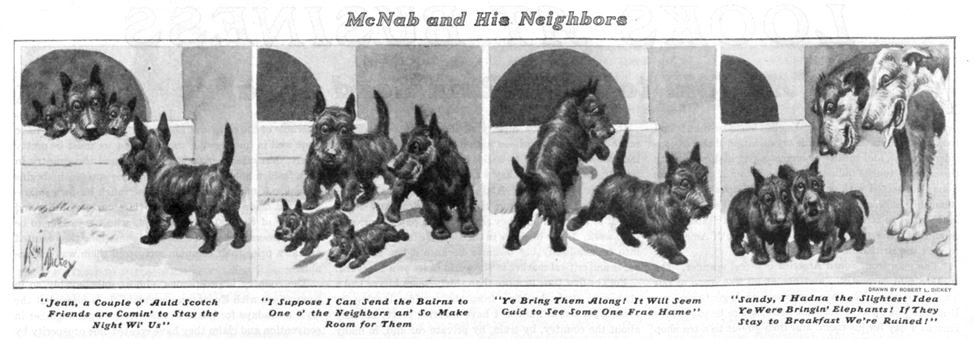
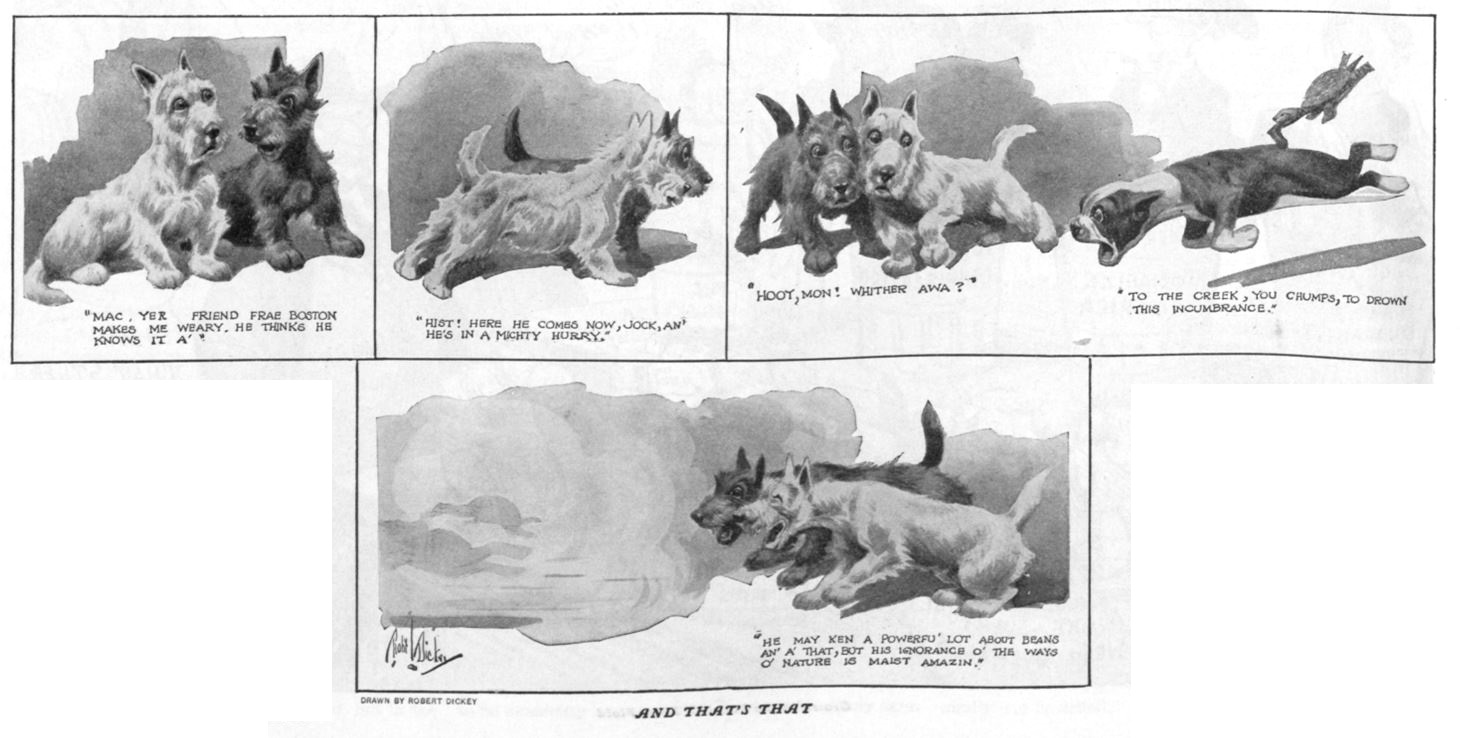
A Midwesterner through and through, Robert L. Dickey displayed a peculiar commitment to thick Scottish dialect in portraying his characters Sandy and Jean McNab. The McNabs were a spousal pair of Scottish Terriers in Dickey’s comic strip, “McNab and His Neighbors” that ran in this magazine through the 1920s. Whether the McNabs were beloved because of their innate cuteness or the silliness of lines of dialogue that would nowadays have readers running for a translator app (“It will seem guid to see some one frae home”) is difficult to say. But Dickey — in spite of his decades of animal illustration that may have changed the way we see our pets — has been all but forgotten. The once-celebrated artist has nary a Wikipedia page or accessible obituary.
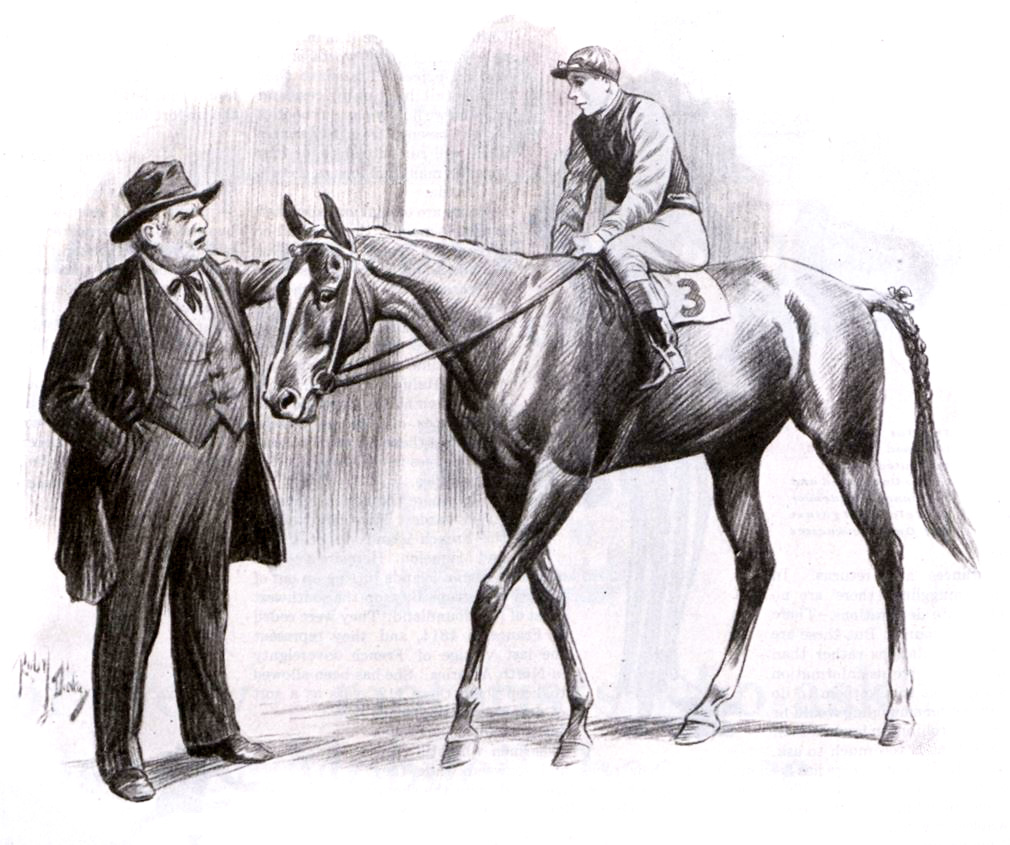
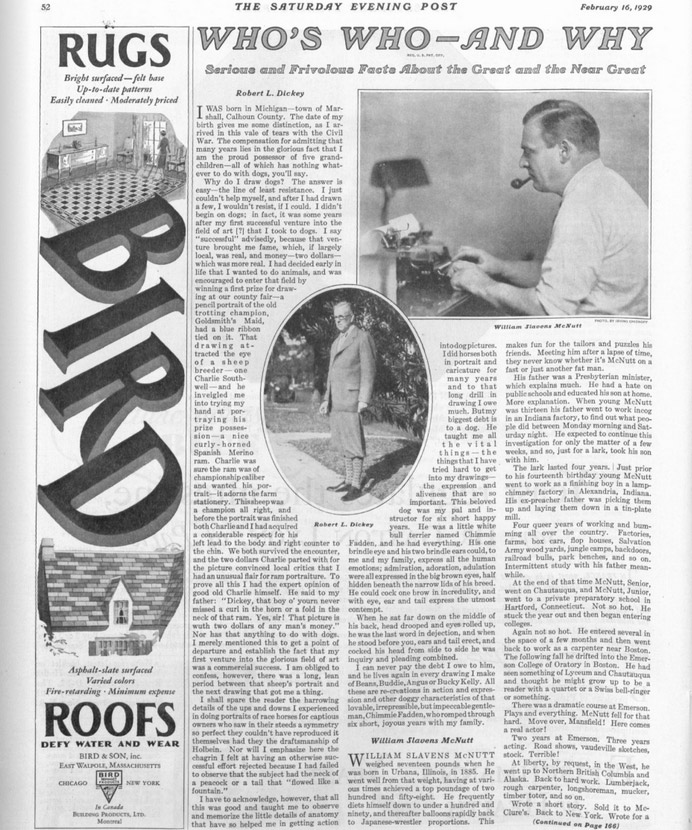
Before drawing adorable pooches, Dickey made his name as a horse illustrator for Chicago’s The Horse Review. As a child, he was enamored with animals, and at a young age he won first prize at the county fair for a drawing of Goldsmith Maid, a legendary mare of harness racing in the 19th century. His winnings amounted to one dollar and a ribbon, but he soon found himself taking commissions from race horse owners and local farmers from his hometown of Marshall, Michigan.
Though he sustained an enthusiasm for horse racing, Dickey’s true artistic muse became the canine. One specific canine, in fact: a white bull terrier named Chimmie Fadden. In the pages of this magazine, in 1929, Dickey proclaimed that his former pet had been a most important art teacher: “His one brindle eye and his two brindle ears could, to me and my family, express all the human emotions; admiration, adoration, adulation were all expressed in the big brown eyes, half hidden beneath the narrow lids of his breed. He could cock one brow in incredulity, and with eye, ear and tail express the utmost contempt.” Of his beloved Chimmie, Dickey also said, “He taught me all the vital things — the things that I have tried hard to get into my drawings — the expression and aliveness that are so important.”
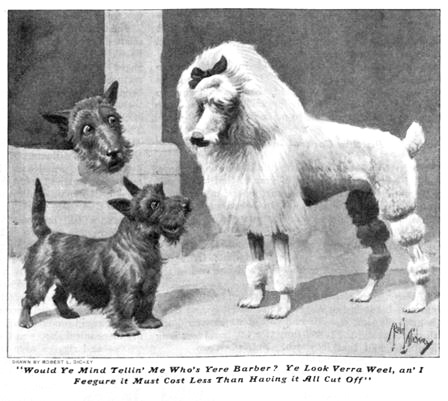
Dickey moved to New York and began publishing comics and illustrations with Life, at the encouragement of editors John Ames Mitchell and Thomas L. Masson. In Dogs from “Life” (1920), Masson calls Dickey “perhaps the best dog artist in this country,” and he credits that success to Life’s guidance, of course. Masson writes that Mitchell advised Dickey to give his dog illustrations more realistic qualities instead of making caricatures: “Don’t make your dogs humorous. You are too good an artist to attempt that sort of thing. Make your dogs true to life — just as they are.”
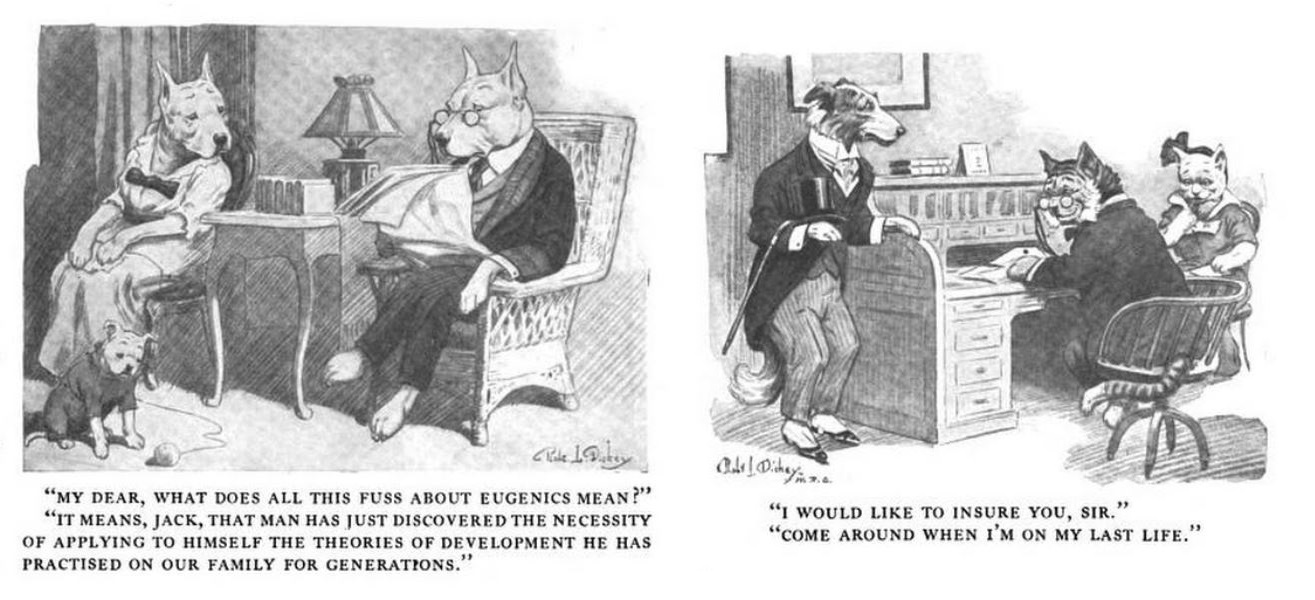
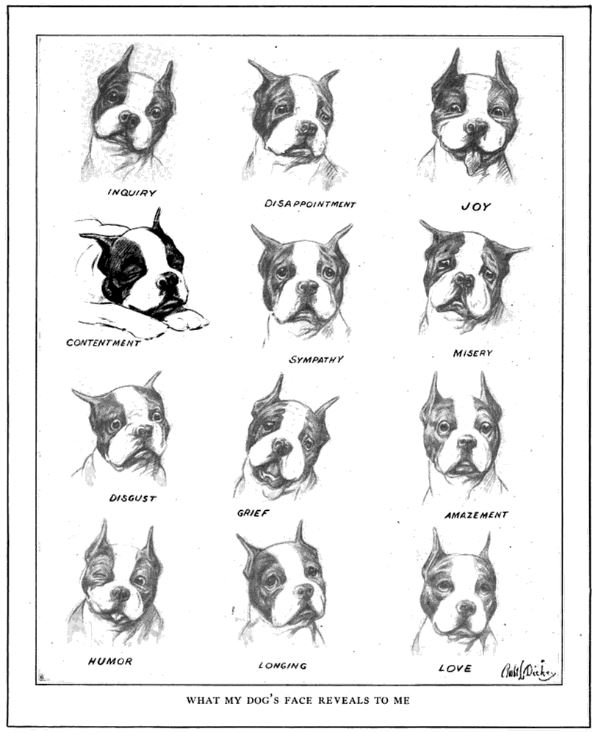
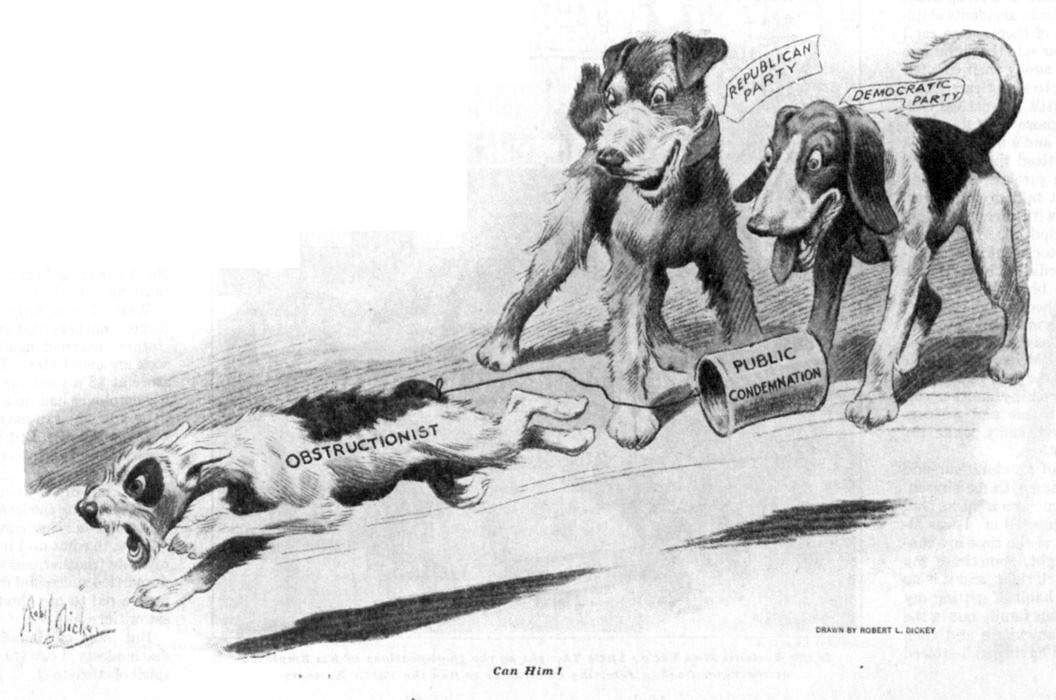
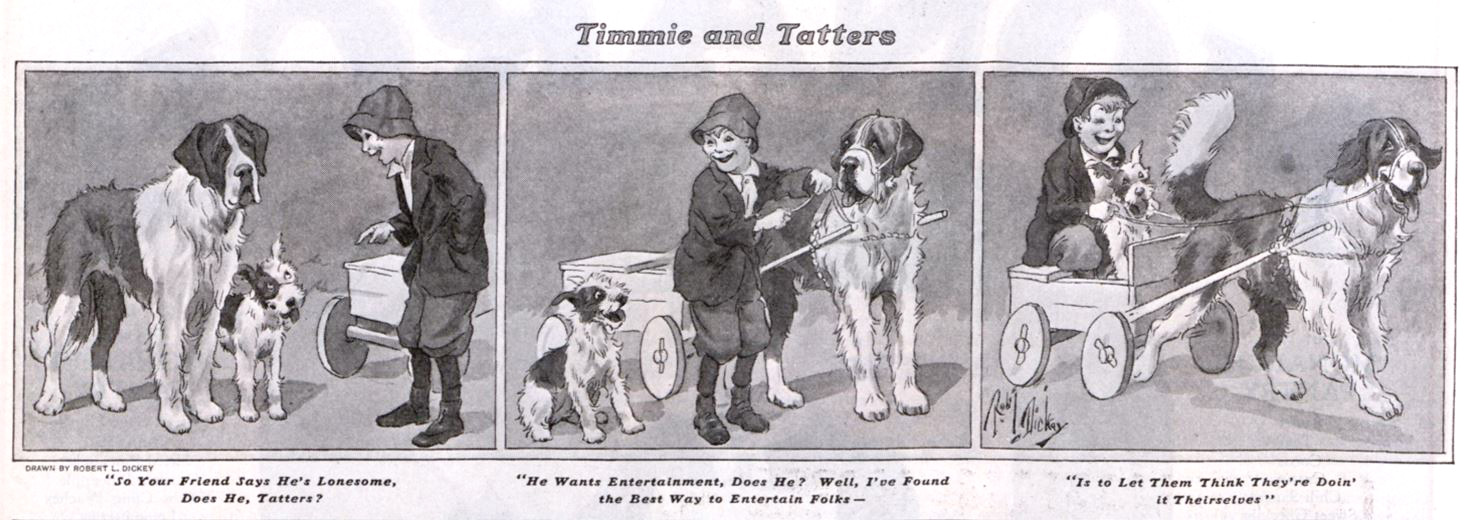
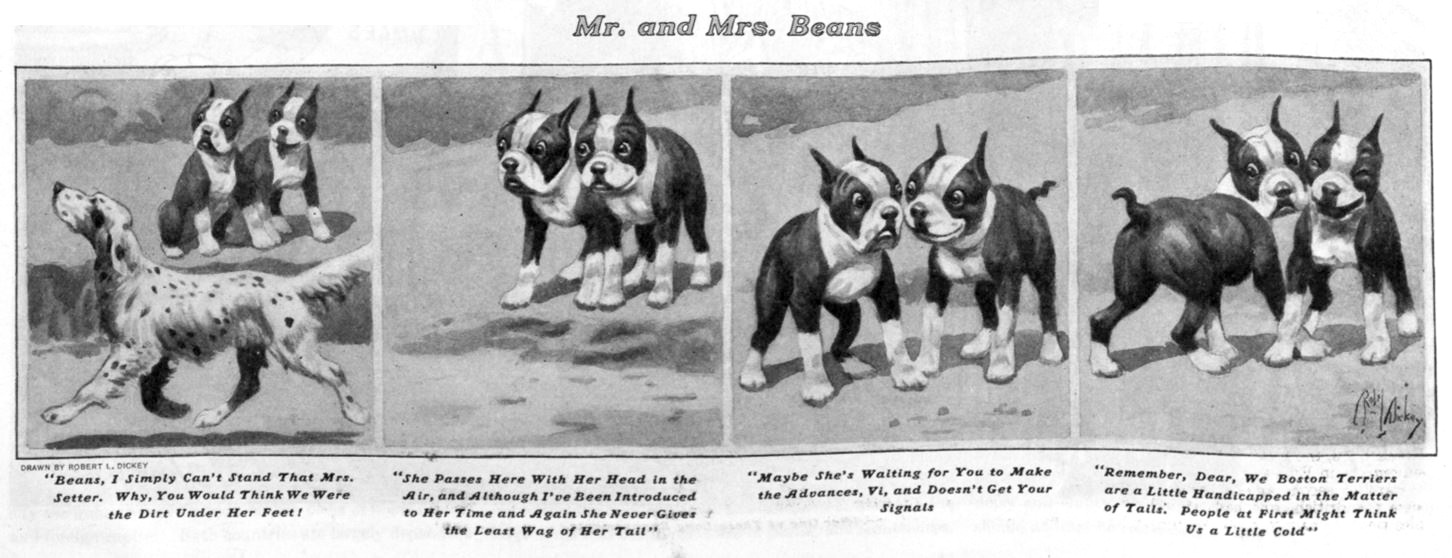
If Dickey followed the Life editor’s advice, he promptly disregarded it for his work in The Saturday Evening Post. After a few tries at political cartoons, Dickey settled in with some recurring characters for the “Short Turns and Encores” section. Throughout the ’20s, in strips like “Timmie and Tatters,” “McNab and His Neighbors,” and “Mr. and Mrs. Beans,” Dickey portrayed cute dogs of various breeds with the humorous hangups and eccentricities of everyday people. With an affinity for terriers, Dickey’s strips showed the lighter side of relationships, middle-class vanity, and machismo.
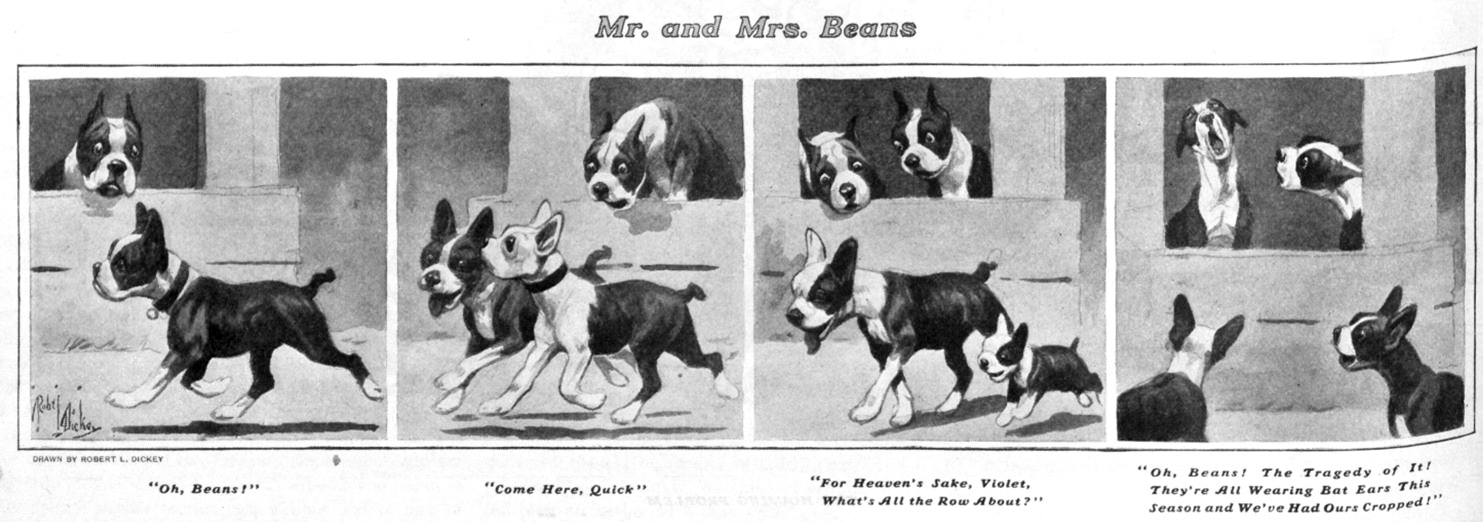
Beans and Violet, Dickey’s signature Boston Terriers in “Mr. and Mrs. Beans,” were named after his own Boston Terriers that travelled with the artist any time he left New York City. Dog historian Cathy Flamholtz credits Dickey for the immense popularity of the breed in the 1920s and ’30s (in Boston Terriers: The Early Years), writing, “While the critics may have scoffed at Robert Dickey’s drawings, the public loved them! Confirmed readers of the most popular magazines fell in love with the clownish dogs seen in the pages of their favorite publications. They wanted one of these dogs and they bought ‘America’s Dog’ in large numbers. Soon, Boston Terriers were one of the most popular breeds in the country.” Flamholtz notes of Dickey’s work in comic strips, tobacco ads, and magazine covers, “The drawings reflect the charm, curiosity, mischievousness, and intelligence of the Boston Terrier. They could only have been made by someone who knew the breed so intimately.”
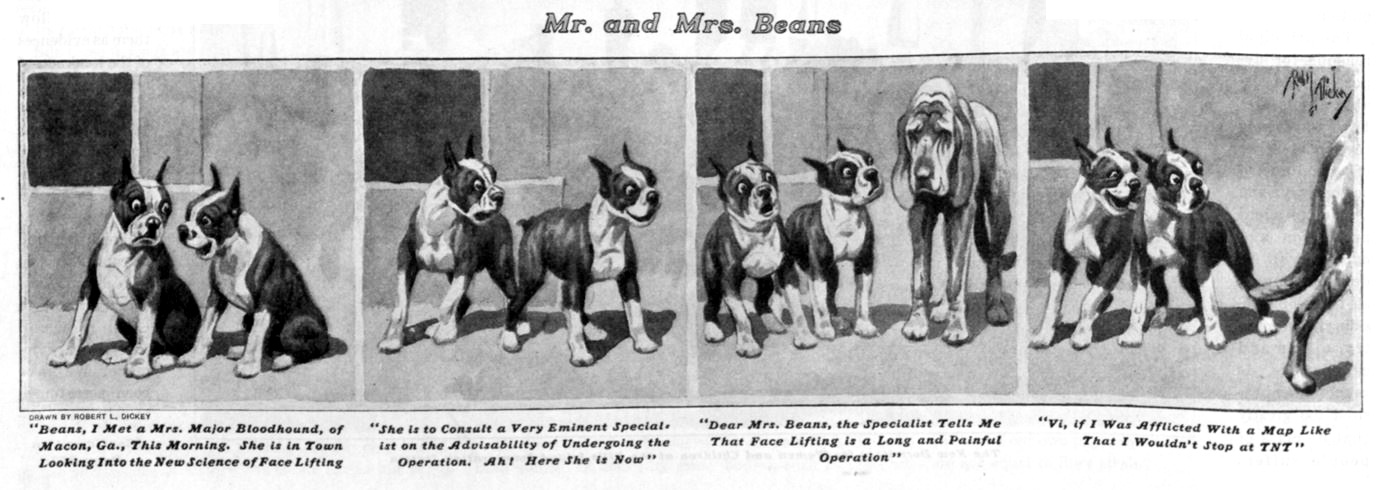
In spite of Dickey’s contributions to American illustration, he is scarcely remembered. His crowd-pleasing comics filled with “puppy dog eyes” and deviant hounds changed the way dogs were rendered in publication and likely altered the way people thought about their four-legged friends. His strips were printed in newspapers around the country as well as Ladies’ Home Journal, Century, and other magazines. He also illustrated the Barse edition of Black Beauty and books like Lad: A Dog and A Dog Named Chips by Albert Payson Terhune. But in his characters, Beans, Violet, and Sandy McNab, Dickey opened the door in the public imagination to the possibility of a dog expressing human faults, joys, and sorrows — and maybe even sporting a Scottish accent.

Subscribe to:
Posts (Atom)