Monday, 1 May 2017

Beltane: Portal of Transformation

The Holy Day of Beltane– called Calan Haf or Calan Mai in Welsh — was revered by the ancient Celts as a sacred bridge between the hardship of winter and the abundance of summer. Thought to exist outside of time, it is said that the veils between the worlds are thinnest at the liminal periods of Beltane and Samhain, complementary Holy Days standing opposite each other on the Wheel of the Year. For the ancient Celts, there were originally only two seasons – Winter and Summer – and the transition points between each season were times of great power. Marking the boundaries between the Dark and Light Halves of the Year, these Holy Days truly straddled the worlds.
These in-between periods were of great importance to the Celtic peoples, whose entire social, economic and religious lives centered around – and were dependent upon — the rhythms of the pastoral and agricultural cycles. Beltane marked the beginning of Summer, and it was a time of purification, increased activity, and abundant fertility. The livestock that had been boarded up during the long winter months were passed between two bonfires both to bless and purify them as they were set out to pasture once more. Ritual lovemaking in the fields was thought to encourage a successful growing cycle and an abundant harvest. Social and economic intercourse during the great gatherings at clan central places were marked by religious observances overseen by Druids, all of which mirrored the lush return to life literally bursting forth in the natural world all around them.
It is easy to understand the importance of the seasonal rhythms to agricultural peoples whose very survival depended upon the strength of their harvest and the well-being of their livestock. It was critical to seek the blessings of the Gods and ancestors to grant increased fertility and good health, both for the land and for the tribe. Many of the Celtic celebrations that have survived the passage of time, some of which are still practiced in some form into the present day, concern the two major polar modalities of Death and Life – dark and light.
This fundamental reliance on the seasonal patterns is not the norm for most Neo-Pagans today who follow paths inspired by the beliefs and traditions of the ancient Celts. However, we can still benefit spiritually by looking at the great pattern revealed by the seasonal cycle through a symbolic filter. Finding insight and relevance in its core wisdom, we can look at this primal pattern as a powerful way to guide our inner process and soul growth. From this perspective, the theme of fertility that lies at the heart of the celebrations of Beltane can be transferred to the abundance of possibilities inherent in our own lives.
The rites of fertility which centered around the fires of Beltane need not be literal. There is great power in entering into a conscious relationship with the Self, and indeed, it is from this sacred union that the spark of creativity is birthed. In Welsh Druidic tradition, this creative spark is called Awen, the inflowing stream of divine inspiration that the Irish called Imbas. Through deep journeying ritual designed to pierce the boundaries between this world and the Otherworld, the ancient bards sought to obtain the gifts of Awen from the Cauldron of Ceridwen, their spiritual Mother. Awen could flow forth in the form of versed prophecy, it could open the gates of consciousness by allowing information to be obtained from objects through a form of psychometry, and it inspired powerful songs and poetry that could influence events by shifting the hearts and minds of those who heard it.
Welsh myth and legend is filled with stories of kings and heroes journeying into the Otherworld seeking magickal cauldrons of healing, wisdom and prophecy. The story of Ceridwen herself describes how over the course of a year and a day — a time marking device in Celtic mythology that indicated a sacred time that is outside of time — brewed an elixir of wisdom for her son. When the elixir was complete, it was stolen from her cauldron by a servant boy who tried to escape Ceridwen’s wrath by using his new-found wisdom to change his shape into various animals as the Goddess pursued him. In the end, the boy tried to hide from Ceridwen in the form of a grain of wheat lying among others on the threshing floor, but she transformed into a hungry hen that pecked at the wheat until she at last devoured him. Nine months later, the servant boy was reborn from her womb as a child with a Shining Brow, the wisdom-endowed babe who would become Taliesin, the greatest of all Welsh bards.
It is believed that this story is an encoded description of a Druidic initiation ritual, and that it represented a process through which Awen, the energy of inspiration that is described by the Celts as a Fire in the Head, could be obtained from the vessel of the Goddess. It teaches us, too, that wisdom is something that can only be earned, and that the greatest wisdom will inspire us to embrace change – especially in the face of the challenges and hardships of life. Awen is a deeply transformational energy, and the Shining Brow of Taliesin is a reflection that he had received the Fire Within the Head – a Celtic acknowledgment, perhaps, of the gifts of enlightenment.
Fire is an important aspect of Beltane; indeed, the four Celtic Holy Days — the “Cross Quarter” days of the Eightfold Neo-Pagan Wheel of the Year — are considered Fire Festivals. Welsh folk tradition speaks of gathering together nine sacred woods to build the ritual fire. These woods were then kindled by rubbing together two oak staves until they sparked and set the fire lay aflame. From this sacred fire built on a hilltop, brands would be taken back into the village to re-ignite the household fires that had been extinguished on Beltane eve  in anticipation of the renewing energies of the ritual fire that marked the passage from the Dark Half into the Light.
In many Celtic lands, two fires were built and as the livestock were brought to their summer pastures after their long winter confinement, they were passed between the two as an act of purification and in hopes of increased fertility. People too, sought the blessings of the fire, and in Wales a ritual drawing of lots occurred where oatmeal cakes were broken into pieces and placed in a bag. Everyone would have to draw a piece, and those who pulled pieces of burned cake would have to jump three times over the sacred fire as an act of purification and to ensure fertility both for the village and for the growing crops.
The tradition of the maypole is linked to May Day celebrations across Europe, and has survived to modern times as a secular dance to celebrate the spring. While the tradition itself is believed to be of Indian origin, it has taken root in Germanic and Celtic lands, where the dance of fertility may have occurred around living trees, or as in the case of some Welsh traditions, around flower garlanded birch trunks. The phallic symbolism of the pole is clear, and the interweaving of ribbons down its shaft symbolically fertilizes the earth in an act of powerful sympathetic magic. The pole becomes the World Tree, straddling the realms and creating a conduit to stream the life-bringing energies from above down to renew that which is below.
Like the maypole and the World Tree, Beltane is a bridge between the worlds, and we can use this sacred time outside of time to foster a connection between the Light and Dark Halves of the Self – what we more commonly call our conscious and unconscious selves. Manifesting this balanced inner partnership is, to me, the key consideration at Beltane. Without it, how can we know what needs to be released, or indeed truly, what spark of potential lies within us, waiting to be fanned to flame?
Here, at this threshold time, we can seek to come into Divine Union with the two halves of the Self – that which dwells unacknowledged in the land of the Unconscious and that which thrives, illuminated, in the realms of the Conscious self. How then can we bridge these aspects of the Self, which, by their very nature, are equal and opposite to each other? We see the repetitions of this coming together over and over again in Neo-Pagan thought and ritual; it can be literally expressed as with the Great Rite, or symbolically evoked as with the ritual union of Chalice and Blade. Yet even these are but sympathetic resonances of even deeper mysteries.
From a psycho-spiritual perspective, the Dark Half of the Self can be said to be the provenance of the Shadow – those experiences and memories that our psyche has deemed, for whatever reason, necessary to be filed somewhere other than the conscious mind. In my personal practice in the Avalonian Tradition, we spend the Dark Half of the Year seeking out those hidden parts of the Self in order to understand their significance and impact on our lives. We cannot rid ourselves of our Shadow side; it is irrevocably a part of us. Instead, our goal is to move energy from one end of the inner spectrum to the other, so that the gift is nurtured while the flaw is starved.
Casting light on the inner Shadow can be painful work, but it is a crucial step along the path to wholeness. There is a saying – “that which is unconscious, controls us.” If we do not know the nature of our Shadow, we cannot know in what ways it manifests itself in our lives. To come to a place of true inner Sovereignty, we must understand the source of the unconscious motivations for our beliefs and actions. We then work to bring these root causes out with us into the light of consciousness, so that we can see them for what they are and reclaim the energy that has been caught up in perpetuating patterns of limitation and negativity in our lives.
The Light Half of the Year, on the other hand, is when we focus on birthing forth and fully actualizing the potential we found hidden in the darkness – a potential that can be finally become realized now that we can see it for what it truly is. The greatest of gifts often lie at the heart of the Shadow; and like the Earth itself, all seeds of growth must germinated in the darkness. At the threshold of Beltane, then, we take the gift of that once-hidden seed out into the Light Half with us, while leaving behind all of the fears and limitations which had committed the seed to dwell in the darkness to begin with. We harness the liminal energies of Beltane to make conscious that which was once unconscious – and in doing so, we liberate the spark which underlies and supports all acts of creation.
It is this spark that fertilizes the new growth we seek to manifest; it is the energy that supports and empowers the work of the Light Half of the Year. In more concrete terms, we can take the energy freed up by the insights gained about ourselves and our negative patterns and beliefs, and direct it towards choices that reinforce the person we know we have the ability to become. As we step through the portal of Beltane, we pass through the symbolic fires of purification and embrace the fertile ground of our limitless potential. We leave behind that which has held us back, and move into a place of positive action which helps us to create the life we wish to live. Why greater act of creation can there be that to set the fires of transformation alight in our souls, and to use the resulting illumination to burn through any outer challenges and inner resistance that stands in the way of our ultimate goal — a whole and holy self that is balanced and expressing its greatest good and highest potential. A sacred flame indeed!

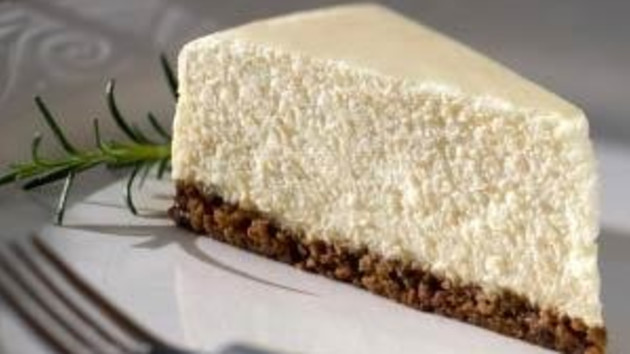
CLASSIC REFRIGERATOR CHEESECAKE RECIPE


Try this classic cheesecake for a gloriously indulgent treat, simple but delicious . . .
By Paul A Young
Classic refrigerator cheesecake recipe 
  • Rating: 
  • Serves: 6-8
  • Prep Time: 20 minutes plus setting plus 1 hr chilling
  • Effort: easy

INGREDIENTS

  • 100 g digestive biscuits, or cookies, crushed into fine crumbs
  • 50 g demerara sugar
  • 50 g butter, melted
  • 500 g full-fat cream cheese
  • 100 g icing sugar
  • 1 vanilla pod, sliced lengthways, or 1 tsp vanilla extract
  • 200 ml double cream, lightly whipped
 

METHOD

1. In a mixing bowl, mix together the biscuit crumbs and Demerara sugar. Add in the melted butter and mix well. 

2. Spoon the biscuit mixture into a 20cm spring-form cake tin lined with silicon paper or baking parchment. Use a metal spoon to press the biscuit crumbs down firmly and evenly. Chill in the refrigerator until set. 

3. In a large mixing bowl, using a whisk or a wooden spoon, beat together the cream cheese, icing sugar and vanilla pod seeds or vanilla extract until well mixed. 

4. Fold in the double cream, mixing well. 

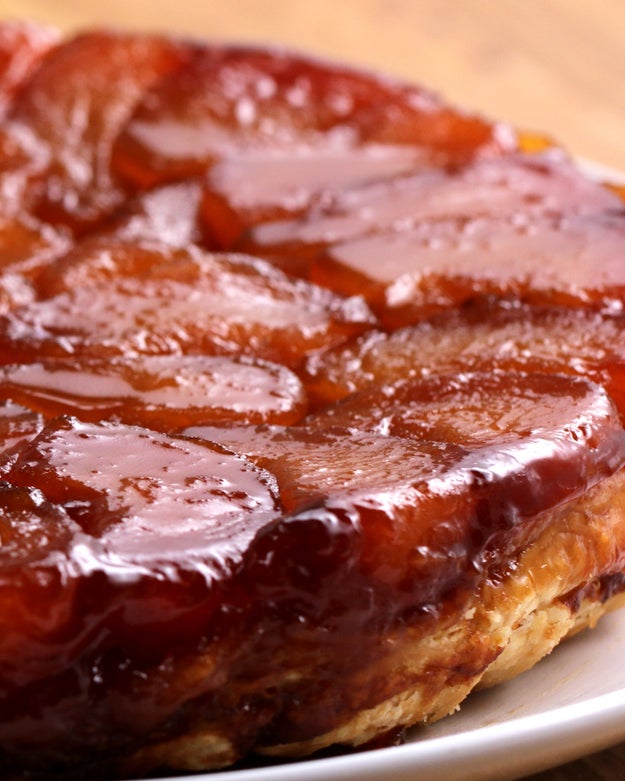
French-Style Apple Tart (Tarte Tatin)

French-Style Apple Tart (Tarte Tatin)

INGREDIENTS

1 sheet puff pastry, thawed
1.5 kilograms apples, preferably Honeycrisp or Granny Smith
100 grams caster sugar
3 tablespoons unsalted butter
Ice cream, to serve

PREPARATION

1. Using a 9-inch pan, cut a circle out from the puff pastry. Using a fork, poke holes all over to provide ventilation. Set aside.
2. Peel and quarter the apples, removing the stems and cores. 
3. Preheat oven to 375°F/190°C.
4. In a large saucepan over medium heat, distribute the sugar evenly and cook until a light amber color, stirring to help melt any lumps.
5. Add the butter, stirring constantly until the color is a creamy light brown.
6. Add the apples, making sure the juices from the apples help dissolve any caramel that sticks to the apples.
7. Cook for about 15-20 minutes, making sure the apples are turned constantly so that they bathe in the caramel. Remove from heat when the caramel has reduced to completely glaze the apples and little remains in the bottom of the pan. Be sure not to burn the caramel, tasting it from time to time to ensure it does not taste bitter.
8. Arrange the apples in concentric circles on the bottom of the pan. Press the apples tightly against each other, then lay the circle of puff pastry on top. Tuck the puff pastry down the sides of the pan.
9. Bake for 45-50 minutes, until the pastry is golden brown and firm.
10. Cool for about 1 hour, then invert onto a plate.
11. Slice, then serve with vanilla ice cream!

GIN AND TONIC LOAF

Gin and tonic loaf
We've transformed a classic G&T into a delicious, moist loaf cake.

Ingredients

  • 200 g (7oz) unsalted butter, softened, plus extra to grease
  • 200 g (7oz) caster sugar
  • 4 medium eggs, beaten
  • 200 g (7oz) self-raising flour
  • 1/2 tsp baking powder
  • finely grated zest 1 lime
  • 75 ml (3 fl oz) gin

FOR THE SYRUP AND TOPPING

Ingredients

  • 125 g (4oz) caster sugar, plus extra to sprinkle
  • 125 ml (4 fl oz) tonic water
  • 31/2 tbsp gin
  • 2 limes, cut in half through their length and sliced into 3mm (1/8in) half moons
  • 100 g (3 ½oz) icing sugar, sifted

Method

  1. Preheat oven to 180°C (160°C fan) mark 4. Grease and line base and sides of a 900g  (2lb) loaf tin with baking parchment. In a large bowl beat butter and sugar with a handheld electric whisk until light and fluffy – about 5min. Gradually add eggs, beating well after each addition.
  2. Fold in flour, baking powder and lime zest, followed by the gin. Spoon into prepared tin  and bake for 55min-1hr or until a skewer inserted into the centre comes out clean.
  3. Meanwhile, make sugar syrup: gently heat the caster sugar and tonic water in a small pan, stirring often, until the sugar dissolves. Turn up heat and boil for 1min. Spoon 2tbsp of the  syrup into a small bowl and mix in 2tbsp of the gin (this mixture will be used to soak the loaf later). Set pan of remaining syrup aside.
  4. As soon as the loaf comes out of the oven, poke holes into the top with a skewer and  drizzle over the reserved syrup/gin mixture. Cool loaf in tin on a wire rack.
  5. Meanwhile, make the candied lime slices. Reheat the remaining sugar syrup in its pan until boiling, then add the lime slices. Simmer for 10-12min until the slices are translucent.  Lift out slices with a slotted spoon on to baking parchment, then sprinkle both sides of the lime slices liberally with caster sugar. Leave to dry.
  6. Make icing by mixing together icing sugar with remaining 1½tbsp gin. Remove cooled loaf from tin, transfer to a board and peel off parchment. Pour over icing and decorate with the dried candied lime slices. Leave the cake to set before serving.

Sunday, 30 April 2017

WALPURGISNACHT: A HISTORY OF THE NIGHT OF WITCHES

Deep in the forests of northern Germany lays the highest peak of the Harz Mountains, Brocken. It is here that in pre-Christian times the locals would eat magic mushrooms, give sacrifices, and dance around bonfires on the eve of May, all for the purpose of bringing in a fertile spring. This is the image of Walpurgisnacht, or Hexennacht (Witches Night). Popularized later by Goethe’s play Faust, this became a popular image to conjure when fictionalizing witches and their antics, although the holiday is little known to those outside Europe or to non-pagans – but Walpurgisnacht and the time of year in which it’s celebrated have an interesting history worth exploring.
The image I gave you of witches on top of the mountaintop, while stereotypical, began in ancient Germanic tradition of pagan rites of spring and fertility celebration. They made sacrifices to their gods for the sake of their crops, and they had orgies as a celebration of the coming warmth. Time passed, the area and its people became Christianized, which lead to the idea that on April 30th, witches gathered to cause general mischief and evil, and so traditions formed out of driving away said evil. Peasants partook in noisemaking, and towns would build large bonfires to keep witches out of the sky. They would burn straw men in the fires and old belongings for good luck. The Christians who had overtaken this area had also forbade anything remotely witchy, such as fortune telling, spell casting, and even proclaimed belief in things such as fae creatures and other old folklore.

It was around this time that Walpurgisnacht got its name from the Christian Saint Walburga in an attempt to Christianize the day. Walburga was an English nun who came to Germany with the task of Christianizing the Saxons, and she became an abbess at the Heidenheim monastery. She became associated with the May eve holiday likely because of ease – she was believed to have been canonized on May 1st. This, combined with the church’s desire to oust the pagans as much as possible, leads to a strange marriage that has somehow lasted the years.
You may have noticed that Walpurgisnacht falls exactly half a year apart from Halloween – this is not a coincidence. Halloween happens on the same date as the Gaelic celebration of Samhain, and beginning at midnight on May 1st is Beltane; these festivals marked both the changes of seasons as well as the dates where the veil between our world and the world of spirits is thinnest. You could consider all of these holidays to be related; in their recognized dates, themes, and celebrations. Beltane, like Walpurgisnacht, involved dancing around large bonfires and bringing in the spring; though Beltane did not have problems in becoming a forced Christianized holiday like Walpurgisnacht did. The Romans also had a very similar holiday, Floralia, celebrating their goddess Flora – they would drink and dance all throughout late April to early May. It was considered a plebian holiday, and they would play many festival games during its celebration.
In the early 1900’s, after the holiday came back into the knowledge of the general populace mostly due to it appearing in a scene in Goethe’s Faust, a revivalist movement tried to bring the holiday back with new celebrations like fireworks and singing folk songs. This has continued to shift into modern Walpurgisnacht, which is still celebrated in a few Germanic countries as kind of “the other Halloween.” In Germany, they like to dress in costumes – such as a witch – and play pranks on one another. In Sweden, the ever present bonfires are lit and folk songs are sung. In Finland, the night is combined with May Day and is one of their most important holidays, which involves – what else – drinking. Then, of course, there are the modern day pagans around the world who celebrate in their own way, Witches Night.


SOURCES:

Saturday, 29 April 2017

The Sketchy Faith Healer Who Tried to Save New York From Vice

John Alexander Dowie also established his own utopia just outside Chicago.

A portrait of John Alexander Dowie, early 1900s.
A portrait of John Alexander Dowie, early 1900s. STATE LIBRARY OF SOUTH AUSTRALIA/CC BY 2.0
John Alexander Dowie was not America’s first faith healer—but he was the first to get rich doing it. Dowie, a Congregational minister originally from Scotland, discovered his unusual gift in 1876, when he was 29. A small girl dying of diphtheria was miraculously cured after Dowie prayed at her bedside.  
A year later he launched his healing ministry. After stints in Australia and California, Dowie moved to Chicago and opened a church near the site of the 1893 World’s Fair. Sadie Cody, who was in town to see her uncle Buffalo Bill Cody’s Wild West Show at the fair, went to see Dowie about a tumor in her back. After he laid his hands on her, Cody later said, she “felt a new life” inside her. The tumor vanished, and word of Dowie’s seemingly miraculous healing powers spread quickly.
In his lifetime, Dowie claimed to cure scores of serious afflictions, including smallpox, cancer, broken limbs, and blindness, as well as lesser ailments like asthma and arthritis. Medical doctors and mainline Protestant ministers, however, dismissed Dowie as a charlatan, noting that many of the illnesses he claimed to cure were psychosomatic, while the most dramatic healings were obviously staged.
Nonetheless, Dowie’s flock multiplied rapidly, and by 1901 he had amassed enough followers to establish his own version of utopia, a biblical city built from scratch on 10 square miles of farmland 40 miles north of Chicago.
The front page of a City of Zion brochure, from the early 1900s.
The front page of a City of Zion brochure, from the early 1900s. STATE LIBRARY OF SOUTH AUSTRALIA/CC BY 2.0
He named the city Zion and proclaimed it a theocracy governed by “the will of God.” Dowie was scornful of the U.S. Constitution, which, he noted, was “capable of amendment and improvement in a Theocratic direction.” Dowie owned everything in Zion: the lace factory, the general store, the bank—even the homes his followers lived in. It was the ecclesiastical equivalent of a company town.
Zion’s residents were required to comply with Dowie’s strict interpretation of the scriptures. “Billboards at the cross streets caution one that swearing or smoking or bad language of any sort are not allowed,” one visitor noted. Also banned: saloons, pork, medical practices, gambling halls, drug stores, and fraternal lodges. Zion’s residents were also required to tithe 10 percent of their income to Dowie.
With his bald head and flowing white beard, Dowie certainly looked like a biblical prophet, and he played the part with aplomb. He appointed himself “General Overseer,” first over Zion, then over all Christendom. “The time has come,” he announced; “I tell the church universal everywhere, you have to do what I tell you … because I am the Messenger of God’s covenant.”
Dowie proclaimed himself Elijah the Restorer, sent by God to prepare the world for the second coming of Christ. Since his mandate was catholic—that is, universal—Dowie named his church the Christian Catholic Church. (The C.C.C. was in no way affiliated with the Roman Catholic Church, which Dowie considered irredeemably apostate.)
An advertisement for John Dowie's sermons in Chicago, 1900.
An advertisement for John Dowie’s sermons in Chicago, 1900. LIBRARY OF CONGRESS/
By 1902 Zion’s population had swelled to 10,000, and Dowie claimed 150,000 followers worldwide. He had also amassed a fortune in excess of $10 million. His annual income from tithes alone was reported to be $250,000. One contemporary scholar has dubbed him a “religious robber baron.” Dowie was not ashamed of his wealth, and he lived in unabashed luxury. “Jesus came to make His people rich,” Dowie preached. Not in the “life to come,” but a “hundredfold now in this time.”
With Zion established, Dowie aimed for new worlds to conquer. He dispatched missionaries to Africa, and he set his sights on America’s undisputed capital of wickedness: New York City. In November 1902 he unveiled a plan to “restore New York” and to “sow New York knee-deep in Zion!” In autumn of the following year, he would bring his “full gospel message of salvation, healing, and holy living to the Gothamites.”
At the time, New York certainly could’ve used a little salvation. Manhattan was so mired in decadence that it was nicknamed the Island of Vice. As Richard Zacks explained in his book of that name, “New York reigned as the vice capital of the United States, dangling more opportunities for prostitution, gambling, and all-night drinking than any other city in the United States.” As a New York police commissioner, even Theodore Roosevelt had been powerless to tame the city. But John Alexander Dowie was determined to succeed where the hero of San Juan Hill had failed.
John Alexander Dowie in his robes as Elijah the Restorer, 1904.
John Alexander Dowie in his robes as Elijah the Restorer, 1904. PUBLIC DOMAIN
Three thousand Zionites eagerly volunteered for the crusade. All through the summer of 1903, they immersed themselves in planning. They pored over New York maps and travel guides. Some studied foreign languages so they could evangelize in immigrant neighborhoods. A guidebook published for the crusaders included helpful tips: “Do not make a confidant of a stranger, no matter how agreeable he or she may be. If in need of information on the street ask a police officer.”
On Saturday, October 17, 1903, eight trains carrying Dowie and his “Restoration Army” converged on New York City. While his followers traveled in coach, Dowie rode in a lavishly appointed private Pullman car.
Dowie’s evangelists were instantly recognizable by the black leather satchels they carried and the greeting they habitually uttered: “Peace to thee.” They canvassed tens of thousands of homes in the city, as well as countless saloons, gambling halls, and brothels. They preached on street corners, and handed out pamphlets promoting rallies and healing services at Madison Square Garden, which Dowie had rented for two weeks.
But dissolute New Yorkers were in no mood to be lectured by a horde of bible-thumping hicks from the Middle West. Almost everywhere they went, the Dowieites were greeted with jeers. The rallies at Madison Square Garden were a catastrophe. Dowie’s longwinded and incoherent sermons were frequently interrupted by catcalls and hisses. One especially unruly meeting was cut short by police who feared a riot would erupt. Amid cries of “Blasphemer!” and “Imposter!” Dowie was forced to flee the arena for his own safety.
The healing services were equally shambolic. All candidates were carefully screened before entering the “healing room.” Those granted an audience with Dowie were asked to surrender their wealth to the Christian Catholic Church if they were healed. Revolts ensued. “The indignation of the invalids was intense,” a reporter said of one botched healing service. “Many of them were on crutches, others were blind, while a few left the beds to test the treatment.”
“Those who go to Dowie for healing and are not healed,” another reporter noted, “are simply accused of being short on faith, and Dowie lets it go at that.”
The New York papers were scathing in their contempt for the crusade. The Examiner dismissed Dowie as “a coarse-grained, low-minded, shame-bereft, money-greedy adventurer.” His followers, the paper added, were “weak-framed, dull-witted creatures who crave a master as a dog does.”
The criticism infuriated Dowie, who was accustomed to nothing but fawning audiences. He did not take kindly to being called a fool, and he responded with vitriol. In his sermons at the Garden he denounced his critics in the press, in the mainstream ministry, and in the audience as “dogs,” “flies,” “rats,” “maggots,” “lice,” and “pigs.”
The New York crusade was an unmitigated disaster. The Christian Catholic Church gained just 125 new members. More ominously, the enterprise cost the church an estimated $300,000, pushing it to the edge of bankruptcy. Soon more financial problems arose. An investigation determined that Dowie had been using Zion’s bank “as his personal piggy bank.” There was discontent in the flock. Dowie suddenly appeared fallible in the eyes of his followers.
A cartoon from a 1903 issue of <em>Puck</em>, showing John Dowie as a wizard offering salvation and receiving bags of money.
A cartoon from a 1903 issue of Puck, showing John Dowie as a wizard offering salvation and receiving bags of money. LIBRARY OF CONGRESS/LC-DIG-PPMSCA-25786
In 1905, one of his top lieutenants, Wilbur Voliva, orchestrated a coup, charging Dowie with “extravagance, hypocrisy, misrepresentations, exaggerations, misuse of investments, tyranny and injustice.” Voliva was installed as the new leader of the church, a position he would hold until his death in 1942. By then, Zion had become thoroughly secularized, just another sleepy suburb of Chicago. The old religious laws were either repealed or ignored. Utopia was dead.
After he was deposed, John Alexander Dowie went abroad to escape his creditors. He died in 1907, just two years after his fall from grace. He was 60.
Dowie’s enduring influence, however, is undeniable. Despite his unorthodoxy, he is still considered one of the founding fathers of modern American Pentecostalism, the branch of Christianity that emphasizes faith healing. His conspicuous consumption paved the way for modern televangelists like Creflo Dollar and Joel Osteen, who preach a so-called prosperity gospel. Dowie is also the spiritual antecedent of unsavory faith healers like Peter Popoff and Oral Roberts, “miracle workers” who have been exposed as frauds.
Dowie’s legacy also endures a long way from Zion, Illinois. One of the missionaries he dispatched to Africa, Daniel Bryant, was an especially efficient evangelist. In 1904 he converted a Zulu chief named Joseph Kumalo; thence Dowieism spread like a brushfire. Today, an estimated 15 million people in six nations in southern Africa belong to so-called Zionist Christian churches. These churches continue to adhere to many of Dowie’s teachings, particularly a belief in faith healing.
It’s likely that few members of these churches are even aware that the Zion in their denomination’s name refers not to the biblical Zion, but to an American hamlet on the windswept shores of Lake Michigan.


Shep Memorial

A small Montana town commemorates the dog who waited at the train station every day for his owner to return. 


A statue of Old Shep, Fort Benton’s unofficial mascot, stands watch in the center of town, waiting for a cowboy who will never return.

In the summer of 1936, a Montana sheepherder fell ill. He was transported to the St. Clare Hospital in Fort Benton and followed by his faithful sheepdog, Shep. As the man lay dying, the old dog remained at his side, fed scraps by sympathetic nurses. When the cowboy died, his family requested that he be sent back East. Even then, Shep the sheepdog followed the cowboy’s casket out to the train depot. He whimpered as he watched his master’s body loaded into a cargo car and carried away.
For the next five-and-a-half years, Shep returned to the train station to wait for his owner to return. Four times a day, without fail, Shep would trot up to the station and scan the disembarking passengers for the man. Though at this point a stray, he became a beloved fixture of the little town and was looked after by the train station employees.
Word of the loyal dog in Fort Benton spread, and Shep became something of a Depression-era celebrity. He was featured as an oddity in early Ripley’s Believe It or Not! syndicated panels. Train travelers would take massive detours to see him at the station. Children sent him Christmas presents. Some of them even tried to adopt him, but Shep never took more than a passing interest in any of his admirers. He was a one man dog. 
Ultimately, it was his unending dedication that killed him. On the morning of January 12, 1942, he waited as usual for the 10:17 train. His hearing had failed, his limbs were riddled with arthritis, and he was struck by the arriving train.
Shep was buried atop a hill overlooking the train depot. His pallbearers were a local troop of Boy Scouts, and hundreds attended the ceremony. The Great Northern Train Company paid for a wooden effigy of Shep and a cutout of his name to be placed atop the hill for all to see. 
Over the years, interest in “Forever Faithful” Shep waned, and his gravesite fell into disrepair. But in the 1980s a group of local historians and civic organizations cleaned it up. Fort Benton restored its pride in its mascot, and demonstrated their love for Shep by installing a new memorial to him in 1994. This steel representation of the faithful sheepdog stands on a railroad trestle in the center of town, looking expectantly over the Missouri River. His memorial is surrounded by an octagonal patio, paved with bricks dedicated to other beloved lost animals.

http://www.atlasobscura.com/places/shep-memorial?utm_source=Atlas+Obscura+Daily+Newsletter&utm_campaign=5006baa771-EMAIL_CAMPAIGN_2017_04_24&utm_medium=email&utm_term=0_f36db9c480-5006baa771-65897069&ct=t(Newsletter_4_24_20174_21_2017)&mc_cid=5006baa771&mc_eid=2cd79a4b6a