Wednesday, 3 May 2017

Salt Folklore and Magic

Spiral design in spilled salt
 Salt has been used magically for ages. Rosanne Olson / Getty Images
Many different magical traditions call for the use of salt in spells and ritual. For centuries, it’s been known as a very magical – and also very valuable – ingredient. But why is salt such a magical item? Let’s look at some of the history behind the use of salt in magic, and some of the ways it’s commonly used in folklore and legend.
Mark Kurlansky’s book Salt: A World History does a great job of summarizing how salt became as widely used as it is.
Salt was actually pretty important in the grand scheme of human civilization. In the early days of mankind, or at least the days prior to industrialization, the process of harvesting salt was time consuming and labor intensive. This meant that salt was a pretty valuable commodity, and only rich people could afford it. The Romans actually paid their soldiers with salt, because it was so important for things like food preservation. In fact, the word “salary” has its root in the Latin word for salt.
So, in addition to being a pretty important – and pricy – bit of the material aspects of human living, salt began to find its way into the metaphysical and spiritual realm. It appears several times in the Old Testament, most notably in the book of Genesis, in which Lot’s wife (who doesn’t appear to have a name of her own) is turned into a pillar of salt after disobeying God’s commands.
In many Eastern belief systems, such as Buddhism and Shintoism, salt is used both as a purifier and to repel evil.
Folklorist Robert Means Lawrence, in his 1898 book The Magic of the Horseshoe, looks at some of the ways salt is used in folk magic around the globe.
  • In parts of Germany, Normandy, and Scotland, salt is used in or around a butter churn to keep witches from souring the butter or harming the cow from which the cream was obtained.
  • Irish folk remedies include the use of salt, combined with a recitation of the Lord’s Prayer, to cure those who might have been “fairy-struck.” A similar story comes from Bavaria and the Ukraine, in which salt is used to determine if a child is bewitched.
  • Egyptian caravans setting out on a journey across the desert used to perform a ritual that involved burning salt on hot coals. This was done to ensure that evil spirits wouldn’t get in the way of the travelers.
Often, salt is used in purification spells. It can be incorporated into smudging and asperging, and in some NeoWiccan traditions it is used on the altar to represent the element of earth. It should be noted that some groups associate salt with water, because of its origins in the sea. Black salt, which is a blend of regular salt and other ingredients, is used in protection magic in some traditions.
Salt has maintained its usefulness in modern folk magic traditions as well. Vance Randolph writes in Ozark Magic and Folklore of a number of mountain beliefs regarding the use of salt.
  • If someone spills the salt at dinner, it means a violent family quarrel is on the way.
  • It’s considered bad luck to lend salt to someone, because that can lead to a feud between the borrower and the lender. A good way to avoid this problem is if you get a cup of salt from someone, pay it back with sugar or molasses instead. Interestingly, in parts of northern England and Scotland it is also seen as bad luck to lend salt, mostly because the person borrowing it can use it as a magical link to curse you.
  • Salt can also be used to detect the presence of witches: in the Ozarks, it is believed that witches don’t eat much salt, so if someone complains about food being too salty, she might be regarded with suspicion. There is also a tale that bewitched cattle will not touch salt.
Many areas include salt as part of local superstition - perhaps the best known bit of advice is that if you spill salt, you should throw a bit of it over your shoulder. This either brings good luck, or keeps evil at bay, depending on which source you consult.
More uses of salt in magic and folklore:

Tiny Mouse Shops of Malmö

Swedish mice can dine at the Nuts of Life restaurant or take a date to the amousement park. 

For most human beings, finding a nice place for a night out is fairly easy. For mice it can be a bit trickier, unless they happen to be living in Malmö, Sweden.


Built into the basement windows of a building on the corner of Bergsgatan and Almbacksgatan are two mouse-sized and mouse-targeted restaurants, Noix de Vie (“Nuts of Life”) and Il Topolino (the Italian name for Mickey Mouse). Each storefront is about 12 by 25 inches.
The former has luxuriously displayed nuts in the window. The latter, with a classic red and white awning and red and white checkered table cloths, is cheese-themed and has a tiny menu on the wall by the door (next to a bit of mouse graffiti that looks like a Guy Fawkes mask crossed with Mickey Mouse), listing cheeses and crackers the mice might have at the restaurant. 
They are the work of the artist (or maybe artist collective) Anonymouse MMX. Anonymouse dreamed up and built the miniature restaurants using materials like matches, buttons, caps, lids, and stamps—i.e., materials that mice would be able to collect and use to build their own establishments.
Other attractions soon followed, including a little fun fair (or amousement park) on Södra Förstadsgatan, named Tjoffsans Tivoli after one of Swedish children’s book writer Astrid Lindgren’s most famous characters. The fair has a literal teacup ride, a couple of games (including “Lucky Cheese”), a house of horrors entered through a cat’s mouth, a Ferris wheel, and a psychic who not only looks into a crystal ball, but does paw readings as well. 


Monday, 1 May 2017

The Owl

The Owl
IN the hollow tree, in the old gray tower,
The spectral owl doth dwell;
Dull, hated, despised, in the sunshine hour,
But at dusk he ’s abroad and well!
Not a bird of the forest e’er mates with him;
All mock him outright by day;
But at night, when the woods grow still and dim,
The boldest will shrink away!
O, when the night falls, and roosts the fowl,
Then, then, is the reign of the hornèd owl!
And the owl hath a bride, who is fond and bold,
And loveth the wood’s deep gloom;
And, with eyes like the shine of the moonstone cold,
She awaiteth her ghastly groom;
Not a feather she moves, not a carol she sings,
As she waits in her tree so still;
But when her heart heareth his flapping wings,
She hoots out her welcome shrill!
O, when the moon shines, and dogs do howl,
Then, then, is the joy of the hornèd owl!
Mourn not for the owl, nor his gloomy plight!
The owl hath his share of good:
If a prisoner he be in the broad daylight,
He is lord in the dark greenwood!
Nor lonely the bird, nor his ghastly mate,
 They are each unto each a pride;
Thrice fonder, perhaps, since a strange, dark fate
Hath rent them from all beside!
So, when the night falls, and dogs do howl,
Sing, ho! for the reign of the hornèd owl!
We know not alway
Who are kings by day,
But the king of the night is the bold brown owl!
Bryan Waller Procter (Barry Cornwall) (1787–1874)
Art Cheryl Baker


Beltane: Portal of Transformation

The Holy Day of Beltane– called Calan Haf or Calan Mai in Welsh — was revered by the ancient Celts as a sacred bridge between the hardship of winter and the abundance of summer. Thought to exist outside of time, it is said that the veils between the worlds are thinnest at the liminal periods of Beltane and Samhain, complementary Holy Days standing opposite each other on the Wheel of the Year. For the ancient Celts, there were originally only two seasons – Winter and Summer – and the transition points between each season were times of great power. Marking the boundaries between the Dark and Light Halves of the Year, these Holy Days truly straddled the worlds.
These in-between periods were of great importance to the Celtic peoples, whose entire social, economic and religious lives centered around – and were dependent upon — the rhythms of the pastoral and agricultural cycles. Beltane marked the beginning of Summer, and it was a time of purification, increased activity, and abundant fertility. The livestock that had been boarded up during the long winter months were passed between two bonfires both to bless and purify them as they were set out to pasture once more. Ritual lovemaking in the fields was thought to encourage a successful growing cycle and an abundant harvest. Social and economic intercourse during the great gatherings at clan central places were marked by religious observances overseen by Druids, all of which mirrored the lush return to life literally bursting forth in the natural world all around them.
It is easy to understand the importance of the seasonal rhythms to agricultural peoples whose very survival depended upon the strength of their harvest and the well-being of their livestock. It was critical to seek the blessings of the Gods and ancestors to grant increased fertility and good health, both for the land and for the tribe. Many of the Celtic celebrations that have survived the passage of time, some of which are still practiced in some form into the present day, concern the two major polar modalities of Death and Life – dark and light.
This fundamental reliance on the seasonal patterns is not the norm for most Neo-Pagans today who follow paths inspired by the beliefs and traditions of the ancient Celts. However, we can still benefit spiritually by looking at the great pattern revealed by the seasonal cycle through a symbolic filter. Finding insight and relevance in its core wisdom, we can look at this primal pattern as a powerful way to guide our inner process and soul growth. From this perspective, the theme of fertility that lies at the heart of the celebrations of Beltane can be transferred to the abundance of possibilities inherent in our own lives.
The rites of fertility which centered around the fires of Beltane need not be literal. There is great power in entering into a conscious relationship with the Self, and indeed, it is from this sacred union that the spark of creativity is birthed. In Welsh Druidic tradition, this creative spark is called Awen, the inflowing stream of divine inspiration that the Irish called Imbas. Through deep journeying ritual designed to pierce the boundaries between this world and the Otherworld, the ancient bards sought to obtain the gifts of Awen from the Cauldron of Ceridwen, their spiritual Mother. Awen could flow forth in the form of versed prophecy, it could open the gates of consciousness by allowing information to be obtained from objects through a form of psychometry, and it inspired powerful songs and poetry that could influence events by shifting the hearts and minds of those who heard it.
Welsh myth and legend is filled with stories of kings and heroes journeying into the Otherworld seeking magickal cauldrons of healing, wisdom and prophecy. The story of Ceridwen herself describes how over the course of a year and a day — a time marking device in Celtic mythology that indicated a sacred time that is outside of time — brewed an elixir of wisdom for her son. When the elixir was complete, it was stolen from her cauldron by a servant boy who tried to escape Ceridwen’s wrath by using his new-found wisdom to change his shape into various animals as the Goddess pursued him. In the end, the boy tried to hide from Ceridwen in the form of a grain of wheat lying among others on the threshing floor, but she transformed into a hungry hen that pecked at the wheat until she at last devoured him. Nine months later, the servant boy was reborn from her womb as a child with a Shining Brow, the wisdom-endowed babe who would become Taliesin, the greatest of all Welsh bards.
It is believed that this story is an encoded description of a Druidic initiation ritual, and that it represented a process through which Awen, the energy of inspiration that is described by the Celts as a Fire in the Head, could be obtained from the vessel of the Goddess. It teaches us, too, that wisdom is something that can only be earned, and that the greatest wisdom will inspire us to embrace change – especially in the face of the challenges and hardships of life. Awen is a deeply transformational energy, and the Shining Brow of Taliesin is a reflection that he had received the Fire Within the Head – a Celtic acknowledgment, perhaps, of the gifts of enlightenment.
Fire is an important aspect of Beltane; indeed, the four Celtic Holy Days — the “Cross Quarter” days of the Eightfold Neo-Pagan Wheel of the Year — are considered Fire Festivals. Welsh folk tradition speaks of gathering together nine sacred woods to build the ritual fire. These woods were then kindled by rubbing together two oak staves until they sparked and set the fire lay aflame. From this sacred fire built on a hilltop, brands would be taken back into the village to re-ignite the household fires that had been extinguished on Beltane eve  in anticipation of the renewing energies of the ritual fire that marked the passage from the Dark Half into the Light.
In many Celtic lands, two fires were built and as the livestock were brought to their summer pastures after their long winter confinement, they were passed between the two as an act of purification and in hopes of increased fertility. People too, sought the blessings of the fire, and in Wales a ritual drawing of lots occurred where oatmeal cakes were broken into pieces and placed in a bag. Everyone would have to draw a piece, and those who pulled pieces of burned cake would have to jump three times over the sacred fire as an act of purification and to ensure fertility both for the village and for the growing crops.
The tradition of the maypole is linked to May Day celebrations across Europe, and has survived to modern times as a secular dance to celebrate the spring. While the tradition itself is believed to be of Indian origin, it has taken root in Germanic and Celtic lands, where the dance of fertility may have occurred around living trees, or as in the case of some Welsh traditions, around flower garlanded birch trunks. The phallic symbolism of the pole is clear, and the interweaving of ribbons down its shaft symbolically fertilizes the earth in an act of powerful sympathetic magic. The pole becomes the World Tree, straddling the realms and creating a conduit to stream the life-bringing energies from above down to renew that which is below.
Like the maypole and the World Tree, Beltane is a bridge between the worlds, and we can use this sacred time outside of time to foster a connection between the Light and Dark Halves of the Self – what we more commonly call our conscious and unconscious selves. Manifesting this balanced inner partnership is, to me, the key consideration at Beltane. Without it, how can we know what needs to be released, or indeed truly, what spark of potential lies within us, waiting to be fanned to flame?
Here, at this threshold time, we can seek to come into Divine Union with the two halves of the Self – that which dwells unacknowledged in the land of the Unconscious and that which thrives, illuminated, in the realms of the Conscious self. How then can we bridge these aspects of the Self, which, by their very nature, are equal and opposite to each other? We see the repetitions of this coming together over and over again in Neo-Pagan thought and ritual; it can be literally expressed as with the Great Rite, or symbolically evoked as with the ritual union of Chalice and Blade. Yet even these are but sympathetic resonances of even deeper mysteries.
From a psycho-spiritual perspective, the Dark Half of the Self can be said to be the provenance of the Shadow – those experiences and memories that our psyche has deemed, for whatever reason, necessary to be filed somewhere other than the conscious mind. In my personal practice in the Avalonian Tradition, we spend the Dark Half of the Year seeking out those hidden parts of the Self in order to understand their significance and impact on our lives. We cannot rid ourselves of our Shadow side; it is irrevocably a part of us. Instead, our goal is to move energy from one end of the inner spectrum to the other, so that the gift is nurtured while the flaw is starved.
Casting light on the inner Shadow can be painful work, but it is a crucial step along the path to wholeness. There is a saying – “that which is unconscious, controls us.” If we do not know the nature of our Shadow, we cannot know in what ways it manifests itself in our lives. To come to a place of true inner Sovereignty, we must understand the source of the unconscious motivations for our beliefs and actions. We then work to bring these root causes out with us into the light of consciousness, so that we can see them for what they are and reclaim the energy that has been caught up in perpetuating patterns of limitation and negativity in our lives.
The Light Half of the Year, on the other hand, is when we focus on birthing forth and fully actualizing the potential we found hidden in the darkness – a potential that can be finally become realized now that we can see it for what it truly is. The greatest of gifts often lie at the heart of the Shadow; and like the Earth itself, all seeds of growth must germinated in the darkness. At the threshold of Beltane, then, we take the gift of that once-hidden seed out into the Light Half with us, while leaving behind all of the fears and limitations which had committed the seed to dwell in the darkness to begin with. We harness the liminal energies of Beltane to make conscious that which was once unconscious – and in doing so, we liberate the spark which underlies and supports all acts of creation.
It is this spark that fertilizes the new growth we seek to manifest; it is the energy that supports and empowers the work of the Light Half of the Year. In more concrete terms, we can take the energy freed up by the insights gained about ourselves and our negative patterns and beliefs, and direct it towards choices that reinforce the person we know we have the ability to become. As we step through the portal of Beltane, we pass through the symbolic fires of purification and embrace the fertile ground of our limitless potential. We leave behind that which has held us back, and move into a place of positive action which helps us to create the life we wish to live. Why greater act of creation can there be that to set the fires of transformation alight in our souls, and to use the resulting illumination to burn through any outer challenges and inner resistance that stands in the way of our ultimate goal — a whole and holy self that is balanced and expressing its greatest good and highest potential. A sacred flame indeed!

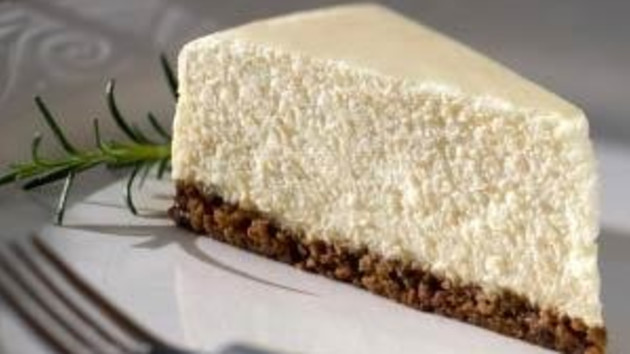
CLASSIC REFRIGERATOR CHEESECAKE RECIPE


Try this classic cheesecake for a gloriously indulgent treat, simple but delicious . . .
By Paul A Young
Classic refrigerator cheesecake recipe 
  • Rating: 
  • Serves: 6-8
  • Prep Time: 20 minutes plus setting plus 1 hr chilling
  • Effort: easy

INGREDIENTS

  • 100 g digestive biscuits, or cookies, crushed into fine crumbs
  • 50 g demerara sugar
  • 50 g butter, melted
  • 500 g full-fat cream cheese
  • 100 g icing sugar
  • 1 vanilla pod, sliced lengthways, or 1 tsp vanilla extract
  • 200 ml double cream, lightly whipped
 

METHOD

1. In a mixing bowl, mix together the biscuit crumbs and Demerara sugar. Add in the melted butter and mix well. 

2. Spoon the biscuit mixture into a 20cm spring-form cake tin lined with silicon paper or baking parchment. Use a metal spoon to press the biscuit crumbs down firmly and evenly. Chill in the refrigerator until set. 

3. In a large mixing bowl, using a whisk or a wooden spoon, beat together the cream cheese, icing sugar and vanilla pod seeds or vanilla extract until well mixed. 

4. Fold in the double cream, mixing well. 

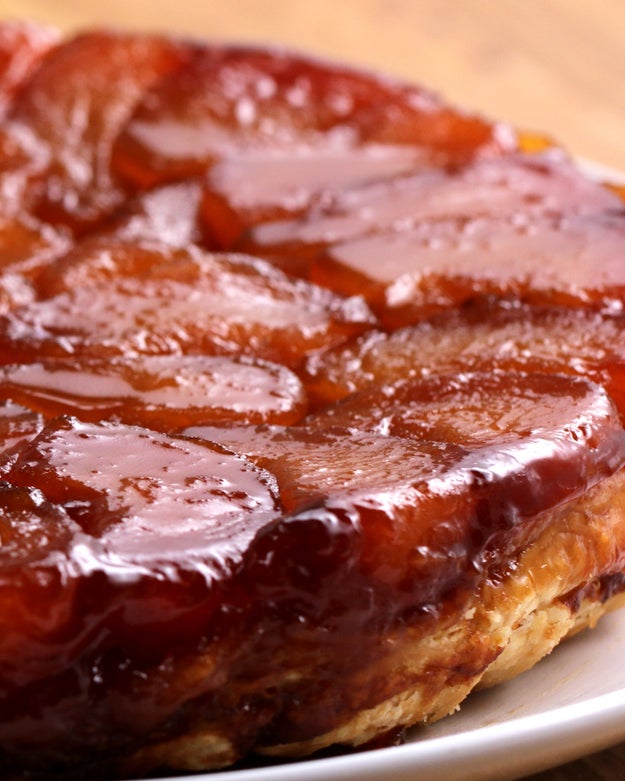
French-Style Apple Tart (Tarte Tatin)

French-Style Apple Tart (Tarte Tatin)

INGREDIENTS

1 sheet puff pastry, thawed
1.5 kilograms apples, preferably Honeycrisp or Granny Smith
100 grams caster sugar
3 tablespoons unsalted butter
Ice cream, to serve

PREPARATION

1. Using a 9-inch pan, cut a circle out from the puff pastry. Using a fork, poke holes all over to provide ventilation. Set aside.
2. Peel and quarter the apples, removing the stems and cores. 
3. Preheat oven to 375°F/190°C.
4. In a large saucepan over medium heat, distribute the sugar evenly and cook until a light amber color, stirring to help melt any lumps.
5. Add the butter, stirring constantly until the color is a creamy light brown.
6. Add the apples, making sure the juices from the apples help dissolve any caramel that sticks to the apples.
7. Cook for about 15-20 minutes, making sure the apples are turned constantly so that they bathe in the caramel. Remove from heat when the caramel has reduced to completely glaze the apples and little remains in the bottom of the pan. Be sure not to burn the caramel, tasting it from time to time to ensure it does not taste bitter.
8. Arrange the apples in concentric circles on the bottom of the pan. Press the apples tightly against each other, then lay the circle of puff pastry on top. Tuck the puff pastry down the sides of the pan.
9. Bake for 45-50 minutes, until the pastry is golden brown and firm.
10. Cool for about 1 hour, then invert onto a plate.
11. Slice, then serve with vanilla ice cream!

GIN AND TONIC LOAF

Gin and tonic loaf
We've transformed a classic G&T into a delicious, moist loaf cake.

Ingredients

  • 200 g (7oz) unsalted butter, softened, plus extra to grease
  • 200 g (7oz) caster sugar
  • 4 medium eggs, beaten
  • 200 g (7oz) self-raising flour
  • 1/2 tsp baking powder
  • finely grated zest 1 lime
  • 75 ml (3 fl oz) gin

FOR THE SYRUP AND TOPPING

Ingredients

  • 125 g (4oz) caster sugar, plus extra to sprinkle
  • 125 ml (4 fl oz) tonic water
  • 31/2 tbsp gin
  • 2 limes, cut in half through their length and sliced into 3mm (1/8in) half moons
  • 100 g (3 ½oz) icing sugar, sifted

Method

  1. Preheat oven to 180°C (160°C fan) mark 4. Grease and line base and sides of a 900g  (2lb) loaf tin with baking parchment. In a large bowl beat butter and sugar with a handheld electric whisk until light and fluffy – about 5min. Gradually add eggs, beating well after each addition.
  2. Fold in flour, baking powder and lime zest, followed by the gin. Spoon into prepared tin  and bake for 55min-1hr or until a skewer inserted into the centre comes out clean.
  3. Meanwhile, make sugar syrup: gently heat the caster sugar and tonic water in a small pan, stirring often, until the sugar dissolves. Turn up heat and boil for 1min. Spoon 2tbsp of the  syrup into a small bowl and mix in 2tbsp of the gin (this mixture will be used to soak the loaf later). Set pan of remaining syrup aside.
  4. As soon as the loaf comes out of the oven, poke holes into the top with a skewer and  drizzle over the reserved syrup/gin mixture. Cool loaf in tin on a wire rack.
  5. Meanwhile, make the candied lime slices. Reheat the remaining sugar syrup in its pan until boiling, then add the lime slices. Simmer for 10-12min until the slices are translucent.  Lift out slices with a slotted spoon on to baking parchment, then sprinkle both sides of the lime slices liberally with caster sugar. Leave to dry.
  6. Make icing by mixing together icing sugar with remaining 1½tbsp gin. Remove cooled loaf from tin, transfer to a board and peel off parchment. Pour over icing and decorate with the dried candied lime slices. Leave the cake to set before serving.