Friday, 4 May 2018

Pasta Puttanesca Recipe by Rick Stein


Ingredients

  • 450g/1lb small cherry, plum or vine-ripened tomatoes
  • 4 tbsp olive oil
  • 3 garlic cloves, chopped
  • 1 sprig of rosemary, leaves finely chopped
  • 4 sage leaves, shredded thinly
  • a good pinch of dried chilli flakes, or 1 red finger chilli, seeded and finely chopped
  • 55g/2oz salted capers, excess salt rubbed off
  • 110g/4oz small black olives, pitted
  • 2 x 50g/2oz cans of anchovy fillets in oil, drained and chopped
  • 2 tbsp chopped oregano
  • 450g/1lb dried bucatini or spaghetti
  • 1 tbsp chopped flat-leaf parsley
  • salt and freshly ground black pepper

Method

  • 1.
    Bring 3.4 litre/6 pint water and 2 tbsp salt to the boil for the pasta.
  • 2.
    For the sauce, squeeze the tomatoes into the sink to get rid of most of the juice, then cut each one in half.
  • 3.
    Heat the oil in a pan with the garlic, rosemary and sage and cook gently for about 1 minute without browning.
  • 4.
    Add the chilli, tomatoes, capers, olives, anchovies, oregano and some black pepper and leave to simmer gently for 10 minutes.
  • 5.
    Meanwhile, add the pasta to the pan of boiling water and cook for about 7 minutes or until al dente.
  • 6.
    Drain and tip it into a large warmed serving bowl. Pour over the sauce, add the chopped parsley and toss together well. Serve straight away, with plenty of red wine.

Thursday, 3 May 2018

Sea Monsters on Maps?


Today, the world is scary because of what we know. In the Medieval and Renaissance periods, the world was scary because of what we did not know. Sea monsters were part of that great unknown, and map and atlas makers embraced them.
A huge variety of marine monsters adorn the maps of the 13th and 14th centuries. There are monsters spouting water, monsters with huge tusks, monsters as big as islands, monsters that are hybrids of multiple creatures (both mythical and factual), and also mermaids, sirens and other humanoid creatures swimming around the oceans.
Maps from this era show how our knowledge of geography was growing but also show our lack of knowledge about large marine animals. Let's assume mariners did indeed see something monstrous in the surf and brought their accounts back to dry land. Whales were plentiful at this time. Blue whales are huge - 30 metres long and weighing 150-plus tonnes. It's easy to understand how a close encounter with a breaching whale becomes a close encounter with a sea monster.

And it's not just whales. Walruses are large, loud and possess fearsome tusks. A sea lion's head poking above the surface looks like a human face. Sharks are fearless hunters. Narwhals have unicorn-style horns. Manatees look like sea cows. With no cameras, these verbal accounts were exaggerated and went from being seafaring tales to being an important element in describing the known and unknown world.
Now consider what went before. In the Bible, Jonah is consumed by a whale. In Homer's Odyssey, Odysseus is waylaid by sirens and the Scylla. Sea monsters were documented by artists in antiquity including as far back as eight centuries before the birth of Christ. There's also the matter of precedent. If one mapmaker says there's nothing in the Atlantic except monsters (Matthew Paris' map of Britain circa 1250 describes the Atlantic as "A vast sea where there is nothing but the abode of monsters."), are you brave enough to produce a map that says otherwise? There's also the fact that ships have a long history of simply disappearing.
And now let's take another view. Mapmakers were in the business of selling maps and maps with monsters are more interesting than ones without. Even the greatest mapmakers, most concerned with getting the geography correct, used monsters. It's awfully tempting to decorate tracts of ocean with monsters in order to charge a higher price.

However, the motivation for placing monsters on maps doesn't matter. Monster-laden maps make geographical history more interesting. These monster-decorated maps looked good in the homes of wealthy noblemen in the 15th century and they look terrific today for people who love history.
The trend for adding monsters to maps waned in the final years of the 16th century. Images of whaling began to be used, showing man's mastery of nature. There was also the consideration that sea travel was vital. Important people, who wanted to encourage colonization of newly discovered lands, didn't want potential travelers scared off by a map showing a parade of saber-toothed monsters off the coast of America.

Sea Monsters on Maps:


Zante or Zakynthos, Greece, 1618

Published Amsterdam by Petrus Bertius, this is a miniature map of the Ionian Island. Zakynthos participated in the Trojan War, according to Homer, and was an important trading center for numerous rulers. It features a water-spouting scaled monster. Learn more

Naples, 1618

Another image from Petrus Bertius, this map of southern Italy shows a pleasant-looking monster. Naples has been inhabited since the Bronze Age. The story goes that the city was founded by a siren who failed to bewitch Odysseus. Learn more

Tercera or Terceira, Portugal, 1618

Terceira is an island in the Azores archipelago in the middle of the North Atlantic. It began appearing on sea charts in the 14th century. The Atlantic was a daunting prospect to many European sailors until it became clear that there was land and riches on the other side. Another map from Petrus Bertius. Learn more

Elba, 1618

Napoleon was famously exiled on this Mediterranean island. It has a long history and has been ruled by every Tom, Dick and Harry from the Etruscans to the Romans and the Visigoths. This sea monster has dragon-like wings. Another miniature map from Petrus Bertius. Learn more

Kingdom of Naples, circa 1710

This is basically Southern Italy. The map was published in Nuremberg and the mapmaker, Johann Baptist Homann, added a sea monster to one of the map's two cartouches. A cartouche is an emblem in cartography. It may contain the name of the map, the date of publication, a motto, a coat of arms or details of the printer. They can be highly ornamental. This is a true example of a decorative sea monster. Learn more

Arabia, 1599

This beautiful copperplate engraving shows the Indian Ocean and Arabian Sea. Jan Huyghen van Linschoten (1563-1611), a Dutch historian and merchant, created this map. He spent 13 years living in India and travelled extensively. His maps paved the way for the Dutch trade routes to the East. This map features unicorns and a large swordfish-like sea monster bearing down on a ship. Learn more

Zeeland, 1687

Zeeland is the westernmost part of the Netherlands, made up of islands and peninsulas. This late 17th century engraved map has an ornate sea monster in its cartouche. Learn more

Nicosia, 1620

This Greek island must have been a grim place in the 17th century to earn four monsters from the mapmaker. Note the compass rose (that's the term for compasses displayed on maps), the cartouche and the castle on the island. Learn more

America, 1630

This 17th century map of the Americas shows numerous misconceptions about the New World. The non-existent islands of Friesland and Brasil are located in the Atlantic. It shows Lake Parime, the rumored location of El Dorado, the fabled city of gold. We're still looking for that one. The interior of America is blank for obvious reasons and the coastlines are highly inaccurate. With so much unknown, a sea monster naturally makes an appearance. Learn more

Peru, 1640

This Peruvian coastline features three sea monsters. The Dutch mapmaker Jan Jansson also added a large decorative cartouche, an elaborate compass rose, and four sailing ships. It's quite detailed, showing more than 100 place names, including Lake Titicaca and Quito. Learn more

Florida, 1591

A map of the Eastern Seaboard from Cape Lookout to Florida, with Cuba and the Bahamas, published by Theodore de Bry in 1591. The map was drawn by the French artist Jacques Le Moyne de Morgues, who'd accompanied French explorer René de Laudonnière to Florida in 1564. The southernmost lake is labeled Lactus Insula Sarrope and most likely depicts Lake Okeechobee. To the north is a lake fed by an enormous waterfall, which may be Niagara. It shows Tampa Bay, gives a rough idea of the Florida Keys and the Everglades. Cuba is detailed with several cities, including Havana. The sea monster is a double-spouted creature. Learn more

Zeeland, 1617

This map of the Dutch province of Zeeland shows a beautiful monster rearing out of the sea. Published in Amsterdam in a book by Petrus Kaerius (also known as Pieter van den Keere), a publisher and engraver who fled to England because of religious persecution. The compass rose has 32 points. Learn more

The Netherlands, 1709

This map shows the seven provinces that comprised the Netherlands in 1709. There is detail of cities, towns, roads, forests, hills, rivers and canals. The North Sea (here called the German Sea) is filled with a magnificent cartouche featuring King Neptune, sea-horses, mer-men, a sea monster, and fishing nets full of fish. The map includes a dedication to Elihu Yale (1649-1721), an English merchant for whom Yale University is named. Learn more

Norway, circa 1700

A sea chart of the Norwegian west coast. The large decorative cartouche show trees being felled and at the bottom there is a mythological figure fighting a sea monster. Learn more

Wales, 1600

This decorative map shows Wales and Ireland, and includes a sea monster off the Pembrokeshire coast, which is perhaps the least likely location to encounter such a thing. The Irish Sea was, and still is, a busy route for shipping with Liverpool and Belfast being major centres for marine trade. Learn more

World, 1632

Printed in Amsterdam, this miniature map shows four continents. The sea monster appears in the decorative corner along with by a cornucopia, a bird of paradise, a salamander, and two scenes from the Garden of Eden and the Last Judgement. Learn more

England & Wales, 1808

This is a caricature produced well after the golden age of sea monsters on maps. Robert Dighton's so-called 'Geography Bewitched' map shows England as a pot-bellied man with a foaming mug of beer in hand, sitting astride a scaly sea-monster. 

Wednesday, 2 May 2018

Woman

Brittany Latham Studios
or the woman who was fired for her fourth tardy because she has been awake for a straight week with a sick child.
For the single mom who doesn't know how the utilities are going to stay on this month.
For the woman who has gone through 2 IVF's and has tried for five years without success but still shows up to every baby shower for her friends.
For the woman who still hasn't forgiven herself for the abortion that she had 20 years ago.
For the woman who has a line of judging eyes at her and her children as she slides her ebt card at the grocery store.
For the woman that opens the door to the news of her husband being killed overseas three weeks before he was to return home.
For the woman that lives a with a quiet anxiety because nobody understands what you could possibly stressed about.
For the woman that gives to her family all day- everyday and just.needs.a.break.
For the woman that smiles at strangers all day in public- but weeps silently every night.
For the woman that heard the rumor about herself at church today.
For the woman sleeping next to a stranger every night.
For the woman whose genetics will never allow her to look like the ones in the magazines.
For the woman that endures one broken relationship after another because there was no father around to teach her what love looks like.
For the woman raising a fatherless daughter and praying that history doesn't repeat itself.
For every single woman that cries in the shower so that nobody else can see. Because if you aren't strong-nobody is.
Just because the water washes your tears doesn't mean that you don't cry.
I am you. I see you. I am with you, I cry with you.


When I'm 80!

For Reading Addicts

Actual picture of me in the future!

THE IMPORTANCE OF DUST JACKETS

Are dust jackets more than just a pretty face?

THE IMPORTANCE OF DUST JACKETS

"Historically, dust jackets are a new concern for authors; you don't see them much before the 1920s. And dust jacket is a strange name for this contrivance, as if books had anything to fear from dust." ― Paul Collins, Sixpence House: Lost in a Town of Books
A college roommate of mine removed the dust jackets from his books and threw them away as soon as he bought them. Other people find dust jackets a nuisance as well. Peter Robins writing for the Guardian books blog on February 25, 2010, asked “What is the point of dustjackets?” He concluded in his piece “No dustjackets required” that the dust jacket “remains an unnecessary and vulnerable encumbrance.”
That might be true of some books—a dust jacket is unnecessary for most leather bound books, books with decorative cloth bindings and books with pictorial covers. Accordingly, most of these are published without a dust jacket. For a book which is published with a dust jacket, however, the dust jacket is necessary and while it may be vulnerable it is not an encumbrance.
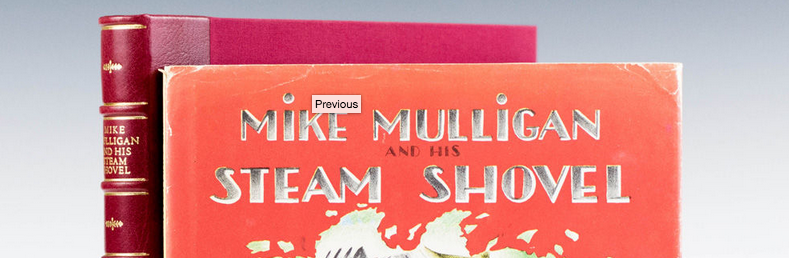
A dust jacket serves several important functions, but it is more than just functional. It is an integral part of the book. A book without its dust jacket is incomplete. Yes, you can still read it and enjoy it, but you do not hold in your hand the final result of the artistic process that culminated in the book.
In the small city where I live there is a sculpture which when first installed had colored sailcloth on it. The cloth wore out many years ago, and no one has ever replaced it. Without the sailcloth the sculpture is not the same as it was before. Nor does it now convey what the artist wanted it to convey. Every art object—and a book is an art object among other things—is incomplete and damaged if any part of it is missing. Book collectors, like art collectors, want the whole work of art. They want the whole book, and that includes the dust jacket.
The dust jacket serves other purposes. It provides the first interpretation of the book. The jacket designer is in some way the book's first critic. A well designed dust jacket also serves to attract a reader browsing in a store. If a book catches a browser's eye, he or she can then turn to the dust jacket's back and flaps to find information about the author and a synopsis of the book. A good dust jacket helps sell a book.
Dust jackets provide the vast majority of books published today with their only color and art. Without their jackets, most books are visually dull. Dust jackets are so important that sometimes an essentially worthless book can be valuable because of its dust jacket. There are poorly written books which have beautiful dust jackets and are collectible solely because of the jacket. Most art deco book jackets are fabulous even if the book under the wrappers is not worth reading. A copy of Irma Rombauer's The Joy of Cooking in its original 1931 art deco dust jacket is worth owning even if you never eat at home.
In some cases, the author is also the illustrator and designer of the book's jacket. Two examples come to mind--Lois Lenski, author of Strawberry Girl, Policeman Small and so many other books and Virginia Lee Burton, famous for books like Mike Mulligan and his Steam Shovel and Katy and the Big Snow. It is hard to imagine these children's classics without their dust jackets.
The jacket does have a functional purpose; unfortunately it is limited. It is not even a great protector against dust as it does not protect the top edges of a book. It does, however, protect the book against wear. The wear you see on a dust jacket is the wear you would see on a book's covers if it did not have a jacket. The modern glossy dust jacket seems to protect books better than the older ones. A coffee spill is more likely to run off a glossy dust jacket than a matte one. By using a mild cleaning solution on a damp cloth, or better yet a solution designed for the purpose sold by companies like Brodart, it is often possible to clean coffee cup and soda can circles, other drink and food stains and the remnants of price stickers from a glossy dust jacket without damaging it. If these same stains were on the book's cover, they would be virtually impossible to remove. Brodart and other companies also sell supplies that will clean the grime from a dust jacket with a matte finish.
Since dust jackets are an integral part of the book, it is a good idea to protect the dust jacket as well as the book in order to protect your investment. You can protect a dust jacket by purchasing mylar covers designed specifically to protect dust jackets. Mylar covers are replaceable when they wear out. Dust jackets are not.
Most booksellers do not buy a book if its dust jacket is missing unless it is a rare book. That means when you remove the jacket from the typical run-of-the-mill book, you have reduced its value to zero. A missing dust jacket will reduce the value of a collectible book by 75-90%. That's reason alone for keeping and protecting a book's dust jacket.

Tuesday, 1 May 2018

Am Beannachadh Bealltain (The Beltane Blessing)

Am Beannachadh Bealltain (The Beltane Blessing)
Bless, O threefold true and bountiful,
Myself, my spouse, my children.
Bless everything within my dwelling and in my possession,
Bless the kine and crops, the flocks and corn,
From Samhain Eve to Beltane Eve,
With goodly progress and gentle blessing,
From sea to sea, and every river mouth,
From wave to wave, and base of waterfall.
Be the Maiden, Mother, and Crone,
Taking possession of all to me belonging.
Be the Horned God, the Wild Spirit of the Forest,
Protecting me in truth and honor.
Satisfy my soul and shield my loved ones,
Blessing every thing and every one,
All my land and my surroundings.
Great gods who create and bring life to all,
I ask for your blessings on this day of fire.
Unknown
Art Delphine Gache


CommentLike