
Sunday, 28 May 2017

Seven Simple Tips to Clear Out Bad Energy


Via Dina Strada
on Apr 18, 2017
get elephant's newsletter

When I was moving into my new house a few years ago, I was working closely with a spiritual teacher at the time.

We used to talk frequently about energy and how to keep it at a high frequency.
As an empath, I feel other people’s energy deeply. So keeping my own energy vibrating highly is incredibly important to me. High vibrations feel better to all of us, so it’s important to surround ourselves with them in our home, our work spaces, and any other place we spend the majority of our time.
My home is my sanctuary, not just because I’m raising my two young children there, but because it’s where I write, recharge my batteries, do my daily meditation, and work with clients.
Bad energy can accumulate like dust bunnies in the corners of our homes and offices over time. It’s especially important to clear out the energy after any of the following events:
>> A major argument
>> A divorce or breakup
>> Negative people being in your space
>> A particularly stressful week or event
>> Being sick
>> When moving into a new space that somebody else occupied
These are some of my regular practices for clearing out any stuck, negative, or stagnant energy and bringing in fresh, high-vibrating juju:
1. Burn sage or palo santo: One of the most common and best ways to clear stagnant or negative energy out of any space—whether it be your office, home, car, or even on yourself—is to burn white sage or palo santo wood sticks.
Palo santo, which means “holy wood,” grows on the coasts of South America and has hints of pine, mint, and lemon. This makes it smell much more fragrant than white sage, which has a more pungent, intense scent. It’s been used by shamans and medicine people for centuries for spiritual purifying, energy cleansing, and healing.
If the energy in your space feels negative or stagnant, burn either of these smudging sticks and swirl it counterclockwise in every room or closet. I also burn it on my front porch to clear away energies of people who have come into my home and office to clear out any bad juju. When finished, place the stick in a fireproof bowl of metal, glass, or clay. The glow will eventually go out on its own.
2. Open all the doors and windows, and run water from all the faucets. A shaman showed me this trick when he walked into my old house, which—at the time—was filled with a lot of painful, negative memories. Open all of the windows and doors of your home, turn on the faucets in the kitchen and bathrooms, and let the water run for just a few minutes. So as not to waste water, especially in high-drought areas (like California where I live), it’s important to find another place where you can conserve water after you do this. I turn my sprinklers off for a few days, shorten my showers by five minutes, and don’t run my dishwasher that week to balance things out.
Editor’s note: More ways to save water here and here.
3. Diffuse essential oils. Essential oils are one of my favorite ways to purify the air and energy in both my home and office. Frankincense is one of my favorite go-to essential oils for clearing out stagnant energy and grounding. I also use a few drops on my kids and myself for immune support and to help in calming the nervous system.
Some other great essential oils for clearing stagnant energy are Purification, Sandalwood, Eucalyptus, and Lavender. All of these purify the air and raise the vibrational energy of the space. There are some great diffusers you can purchase in stores and online for burning these essential oils. My two favorite places to order high-quality essential oils online are DoTerra and Young Living.
4. Crystals. My house is full of really cool crystals I’ve collected during my travels. White quartz and black tourmaline are my favorites for clearing out negative energy. I buy mine from a local shop in Los Angeles, but they can be also be found at many reputable shops online.
5. Sea salt. There are different ways to use salt to clear energy. One is to sprinkle sea salt into different corners of the room, let it sit for a few hours, and then vacuum it up. Salt is well-known for absorbing negative energy. You can also place black tourmaline in the corners of rooms with a little salt sprinkled around it to absorb any lingering energy in the space.
Another great way to clear energy, especially your own, is to soak in an Epsom salt bath. I put two cups of Epsom salts into a warm bath with some lavender oil and soak for at least 20 minutes when I feel sluggish, tired, or irritable. It’s phenomenal for opening up your chakras and getting the good chi flowing through your body again.
6. Affirmations and mantras. We often don’t realize not only how powerful our thoughts are, but the energy those thoughts create in our personal spaces. When we’ve been stressed, upset, angry, or depressed, our homes and offices absorb that energy like a sponge.
When I’m doing a clearing of my home or office, I typically burn sage or palo santo, run water from all the faucets for a few minutes, open the doors and windows, and say the following:
“I clear this space of any and all negative energy and anything lingering here that is not for my highest good. Burn out and clear away anything that is no longer serving me. Surround this space with a container of white light to protect me from all lower energies and anything not serving my very highest self. And so it is…”
Whatever you choose to say when clearing out your own space, do what feels right for you, but make sure to include something in there about clearing out anything not in alignment with your highest self.
7. Music and candles. The last thing that always helps in rebalancing the space is lighting some candles and putting on some high-frequency music that creates a soothing, zen vibe. I personally love listening to yoga and meditation playlists I’ve created on Spotify, but I recommend you play whatever feels most grounding to your own heart.
Pair that with at least a dozen candles to bring warmth back into your space, and you’ll really feel the shift!
None of these practices take very long, and they make all the difference in how you feel and how the space feels to other people when they walk in. Like routinely clearing out the other clutter in our lives, it’s important to clear the emotional clutter as well.
Happy spring cleaning!
~
Author: Dina Strada
Editor: Catherine Monkman
Why was French spoken in Russia?

May 25, 2017 OLEG YEGOROV, RBTH
"How is vodka..?" "Why does Putin..?" RBTH has chosen some of the most popular search queries related to Russia and will answer each question in detail in a series of articles titled "Why does Russia..?" Today we explain why in the Russia of the 18th and 19th centuries high society spoke French almost more than Russian.
Why Russians used to speak French

Leo Tolstoy's novel War and Peace remains one of the most difficult books for pupils on the school syllabus in modern Russia, and not just because of its impressive four-volumes. "When I opened the first pages and saw that about half of the text was in French, I thought: Well, I'd better read a brief summary instead," says 23-year-old Muscovite Alexei about his school experience of reading Tolstoy.
Indeed, the dialogues between members of the St. Petersburg nobility in the salon of high-society hostess Anna Pavlovna Scherer that War and Peace opens with are half composed of French phrases, and this is not the author's invention but a reflection of the mores of the early 19th century (the first volume of War and Peace describes the events of 1805). As Tolstoy observes one of his characters: "He spoke in that refined French in which our grandfathers not only spoke but thought." In the 18th century French "conquered" Russia, becoming the unofficial language of the aristocracy. Why?

Facing the West

It all started with the reforms of Peter the Great, who ruled Russia from 1682 to 1725. Peter, the third of the Romanov tsars, drastically changed the direction in which the country was moving - his dream was to turn Russia into a European power. To achieve this, he not only engaged in wars but also destroyed the patriarchal ways of old Russia: He forced nobles to cut their beards, wear European dress, and travel to the West to study. As a result, noblemen at high-society gatherings in the 18th century started conversing in foreign languages. 
Of all the Western languages it was French that dominated during that period, not just in Russia but in Europe as a whole. "French was the first language which introduced the notion of a single set of norms," is how psycholinguist and translator Dmitry Petrov explains the success of the French language. France's First Minister Cardinal de Richelieu should be thanked for this, Petrov says. In 1635 Richelieu founded the French Academy which dealt with the creation and regulation of a set of language norms. In the end, French gradually squeezed out Latin as a language of international communication.

The French wave

The French Revolution (1789-1799) gave an additional impetus to the French language's spread among the Russian nobility. Many aristocrats fled the country after it was engulfed in rebellion and found refuge, inter alia, in Russia. The number of émigrés in that period reached 15,000.
The government of the Russian Empire treated any revolution with suspicion and welcomed monarchists in their country. Some of them achieved high positions serving the Russian throne - such as Armand-Emmanuel Richelieu, a descendant of the famous cardinal, who became governor of Odessa (now Ukrainian territory). Others, not so successful, became governors in rich families and taught dancing and fencing to the children of noblemen.

Gallomania and Gallophobia

Long before Tolstoy, journalists and writers had noted the Russian nobility's wholesale infatuation with everything French - and there were heated debates about the craze. Some people thought that loans from the French enriched Russian culture and added refinement to the language, while others believed they led nowhere. "We will drive our own language into total decline," commented People's Education Minister Alexander Shishkov, who campaigned for the purity of Russian. 
In his comedy "Woe from Wit" (1825), the writer Alexander Griboyedov referred ironically to Russians who worshipped everything French while being unable to string two words together in the language, summing up the phenomenon in the phrase: "A mixture of French and Nizhny Novgorod" (Nizhny Novgorod is a provincial town 401 km east of Moscow). And yet all the nobility conversed in French - it was a courtly language associated with chivalry and exalted feelings. A study of the correspondence of the most famous Russian poet, Alexander Pushkin, who is regarded as the founder of the modern Russian language, revealed that about 90 percent of his letters to women were in French.

Decline of Francophony 

During the Napoleonic Wars, in which Russia and France fought on opposite sides, the popularity of French began to wane. Patriotic sentiments compelled the nobles to speak more in their native tongue - and sometimes it was a matter of survival. Poet and hero of the War of 1812 Denis Davydov recalled that the peasants (who knew no French and were frequently illiterate) at times "mistook [aristocratic officers] for the enemy because of their foreign accent in Russian" and could attack them with an ax or take a shot at them with a firearm.
The period of infatuation with France came to an end and many Gallicisms that had entered the Russian language in the 18th century fell into oblivion, but dozens of words nevertheless remained. Russians do not think twice of the foreign origin of words like "afisha," "pressa," "sharm," and "kavaler" [meaning "advertising poster," "press," "charm," and "male admirer," respectively]. "Some remained if they were needed by the language, but others disappeared if they were surplus to requirements," said the writer Pyotr Vail in a comment on the history of loan words. "The same thing is happening and will continue to happen with other words grafted onto the language."

The 1,500 years old Angel Oak is one of the oldest living things east of the Mississippi River

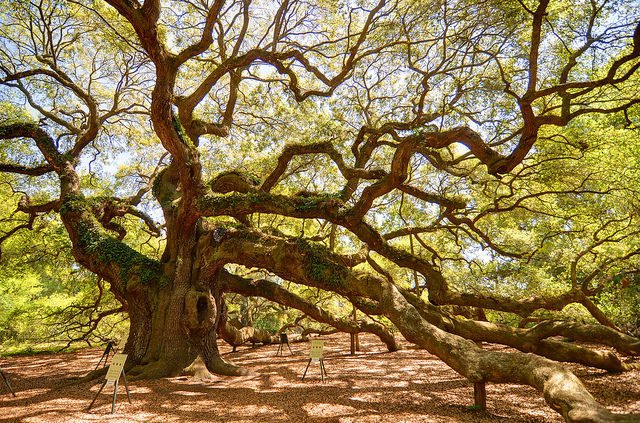
The Angel Oak is a Southern live oak tree located in Angel Oak Park, on Johns Island, South Carolina and is one of the largest living oak trees in the world.
It is believed to be around 1,500 years old – though that is an estimate and not a definitive age.
1474363629-2156-s-virginiana.-Source-640x423
Photo credit

1474363629-8796-Johns-Island.-Source-640x425
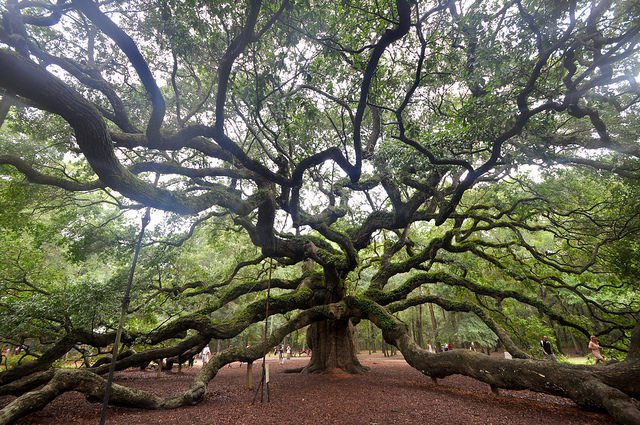
The Angel Oak is one of the most beautiful and important parts of Johns Island. Photo credit
The oak is more than 65 feet high with a circumference of 25.5 feet, provides more than 1,700 square feet of shade and the largest limb measures 11.25 feet in circumference, stretching 89 feet in length.
Some locals simply call it The Tree because of its beauty and age and it is an absolute must see for anyone visiting Charleston, South Carolina.

1474363630-6119-t.-in-length.-Source-640x480

1474363630-9842-in-the-South.-Source-640x423
The oldest living organism in the South Carolina. Photo credit
Recorded history traces the ownership of the live oak and the surrounding land to 1717 when Abraham Waight received it as a part of a small land grant.
The oak derives its name from the estate of Justus Angel (an African American slave owner) and his wife, Martha Waight Tucker Angel. Local folklore tells stories of ghosts of former slaves appearing as angels around the tree.
1474363630-5467-Gentle-Giant.-Source-640x427
Because of its size they call it the Gentle Giant. Photo credit
While live oaks are known to only grow out and not upwards, the long history of Angel Oak has allowed it to grow both out and up and this explains why it is so tall.
Its branches reach in all directions with some driving underground and then growing back up above the surface. The tree trunks themselves are so heavy and big that some of them drop to the ground, something which is only universal among the oldest live oaks.
1474363630-8565-Oak-Society.-Source-640x359
The oak was the 210th tree to be registered with the Live Oak Society. Photo credit
Over the centuries, Angel Oak has survived rough weather including earthquakes, floods and it was damaged severely during Hurricane Hugo in 1989 but has since recovered.
The tree is a popular tourist attraction and the city holds cultural events in the park, including the “An Evening under the Angel Oak” series of events.
1474363634-1984-he-Angel-Oak.-Source-640x426
Today, there are petitions about saving the Oak because the City Council approved a plan to put 600 homes and a shopping center on the property surrounding the Angel Oak. Photo credit

 In 1991, the City of Charleston purchased the plantation’s property that the giant Angel Oak tree sits on. In addition to the peace and beauty the angel Oak brings to its visitors, the tree has also been recognized as a 2000 Millennium Tree and as the 2004 South Carolina Heritage Tree.


The Peacock Chair: A vintage piece of furniture reserved for the coolest people

Seems like the 20th century was definitely a period of cool inventions and creations that are still remembered today.
Among those creations was the peacock chair, also known as the throne-like chair.
Chairs like this became popular during the early period of the 20th century in America, after being imported from the Philippines. First, they were used in photography studios, parlors and smoking rooms in prestigious houses.
Later, the chair was favored by celebrities who liked to take their photos in it, which made them look even more fabulous than they already were.
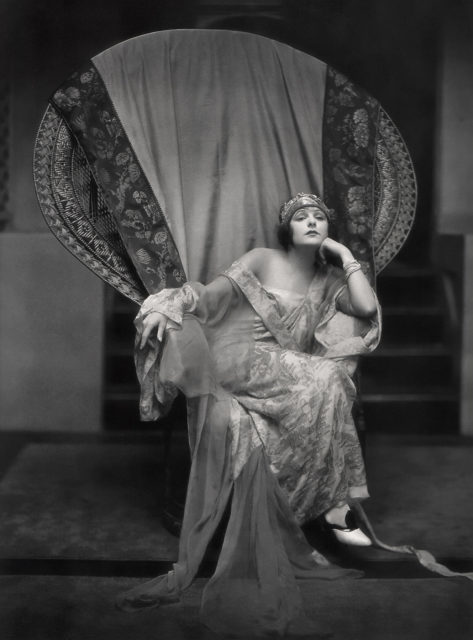
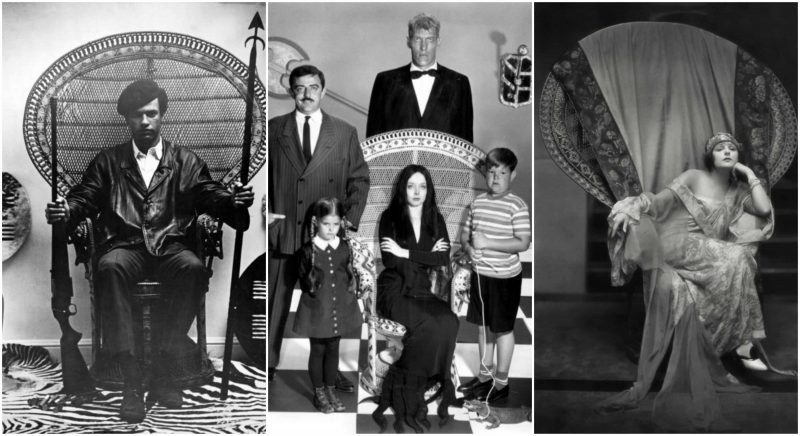
Dramatic publicity shot of actress Norma Talmadge seated in a large wicker Peacock chair. Photo Credit
Made of strong but lightweight material, the chair’s impressive throne design was the crucial feature that made it so famous. At first sight, it may seem like a simple piece of furniture but once you sit in it and make yourself comfortable, a sense of dominance takes over you and you feel powerful.
However, we all know that a person’s power is boosted by their self-confidence, and those who feel confident about themselves always leave a powerful impression. This chair had that kind of influence on people and perhaps that’s why everyone liked it so much in the first place.
It was a booster of confidence and we can notice that dominant attitude and confident look in the eyes of those who used the chair for taking photos.
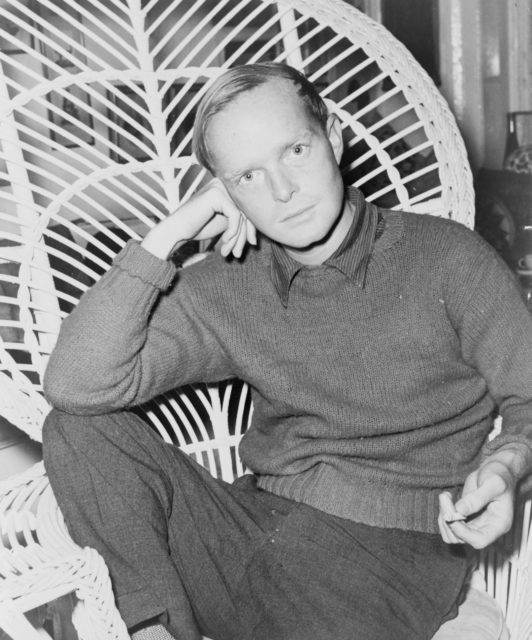
Truman Capote in 1959. Photo Credit
Famous people like Truman Capote, Marc Bolan, Al Di Meola, Francoise Hardy, Jasper Johns, Norma Talmadge, Al Green, Diana Ross, Dolly Parton, Elisabeth Taylor, Bette Davis, Katherine Hepburn, Robert Plant, and many others took photos on the famous chair.
One such celebrity who was practically ‘addicted’ to the throne-like chair was Brigitte Bardot. We must say that she looked like a real goddess sitting on her ‘throne.’
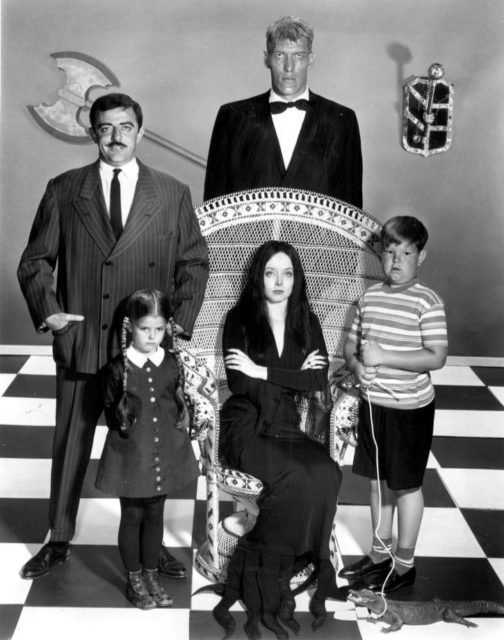
The main cast of the Addams Family, 1964. Photo Credit

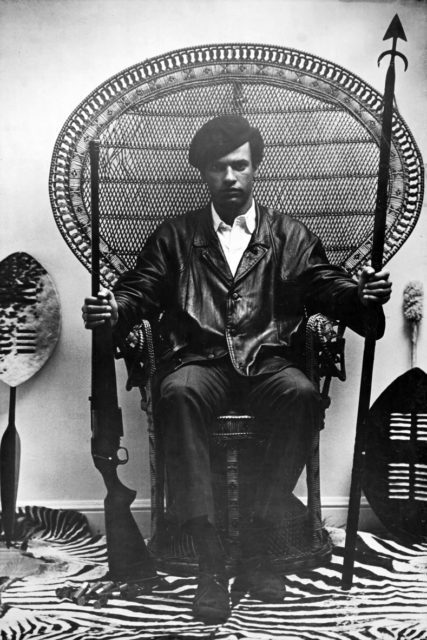
Huey P. Newton, a famous political activist seated in a wicker Peacock chair, 1967. Photo credit

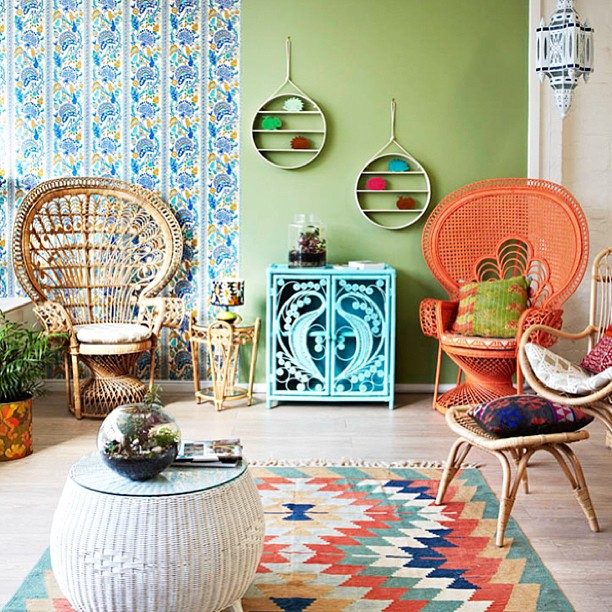
A modern living room with two Peacock chairs. Photo credit
According to dangerous minds, during the second half of the century, a poster of Huey P. Newton, the African-American political activist and co-founder of the Black Panther Party, changed the throne-like impression of the chair and associated it with hipster youth.
Although the chair has a lot of variations, the glamorous and powerful yet casual impression it gives in photos of people posing in it will always remain.


Seems like the 20th century was definitely a period of cool inventions and creations that are still remembered today.
Among those creations was the peacock chair, also known as the throne-like chair.
Chairs like this became popular during the early period of the 20th century in America, after being imported from the Philippines. First, they were used in photography studios, parlors and smoking rooms in prestigious houses.
Later, the chair was favored by celebrities who liked to take their photos in it, which made them look even more fabulous than they already were.
Dramatic publicity shot of actress Norma Talmadge seated in a large wicker Peacock chair. Photo Credit
Made of strong but lightweight material, the chair’s impressive throne design was the crucial feature that made it so famous. At first sight, it may seem like a simple piece of furniture but once you sit in it and make yourself comfortable, a sense of dominance takes over you and you feel powerful.
However, we all know that a person’s power is boosted by their self-confidence, and those who feel confident about themselves always leave a powerful impression. This chair had that kind of influence on people and perhaps that’s why everyone liked it so much in the first place.
It was a booster of confidence and we can notice that dominant attitude and confident look in the eyes of those who used the chair for taking photos.
Truman Capote in 1959. Photo Credit
Famous people like Truman Capote, Marc Bolan, Al Di Meola, Francoise Hardy, Jasper Johns, Norma Talmadge, Al Green, Diana Ross, Dolly Parton, Elisabeth Taylor, Bette Davis, Katherine Hepburn, Robert Plant, and many others took photos on the famous chair.
One such celebrity who was practically ‘addicted’ to the throne-like chair was Brigitte Bardot. We must say that she looked like a real goddess sitting on her ‘throne.’

Unicorn Rose Tree


Unicorn Rose Tree.
Once upon a time
in a land of castles and unicorns
where all who lived there 
believed in romance
and magic, too
a giant rose tree grew
Unlike any other
the rose tree was
bigger and more beautiful
than any rose tree ever
the trunk so sturdy and gnarled
it looked like it had been
growing forever.
Each rose bloomed so full
as if bursting with sunshine and bliss
so perfect in every way
scented with the sweet perfume
of a smile and a kiss.
And everywhere the petals fell
another blossom grew
and not a single thorn
no wonder
gentle creatures gathered
beneath this enchanted tree
for every rose
seemed to be
the colors of a unicorn.
The whites so innocent and free
the pinks so tender and happy
year after year
beauty and hope reborn
with a healing light
growing from within
just like the heart
glowing within a unicorn.
Some people questioned
how could this be
where did this rose tree come from
what kept the rose tree going
must be a mystery from above
but, of course,
the unicorn knew
what made the rose tree bloom
and grow so strong
and live so long
no mystery from below or above
it was the magic of love.
Unicorn Rose Tree prose by Carol Cavalaris
Art Carol Cavalaris


Show More Reactions

Keeping the Art of Knot Tying Alive

A guild of knotters won’t let this historic craft die.

Snowwolfs Woodland Nook

There is a place where I must be,
Where from my troubles I am free,
No sorrows in this green cocoon,
Wherein with spirit I commune,
No earthy place this hidden wood,
Time to be there, I really should,
So on I go by spirits gate,
My only home decreed by fate.
Robin Green-Elk
Photography Klaus Echle


Show More Reactions