Wednesday, 8 February 2023

CHILDREN, DOGS AND MENTAL HEALTH

 https://www.dog-first-aid.com/blog/children-dogs-and-mental-health?fbclid=IwAR2utIByG1JZcUoDVUj4mRFaFYD9zzzBlhufmB0Jh_2Y91cNbIczlWQNJII


February is National Children’s Mental Health Month. This is a subject close to my heart because I have two children who are neurodiverse and periodically struggle with their own mental health. I’m also a canine professional so I thought I’d combine the two subjects in an article about why dogs are so good for children’s mental and physical health.

Kathy Hobson
Kathy Hobson
Franchise Partner

Why dogs are so good for children’s mental and physical health

There are many, well documented, benefits to children (and adults) of having a dog in the family. Petting a dog releases ‘happy’ hormones which makes a child, well, happier! These children are less likely to suffer from anxiety and depression. These same hormones can potentially also reduce feelings of pain. 

Children will generally be fitter, getting more exercise and fresh air. They will become ill less often – the microbes that dogs carry in from outdoors seem to improve the developing immune system and there is even a reduced risk of allergies and asthma.
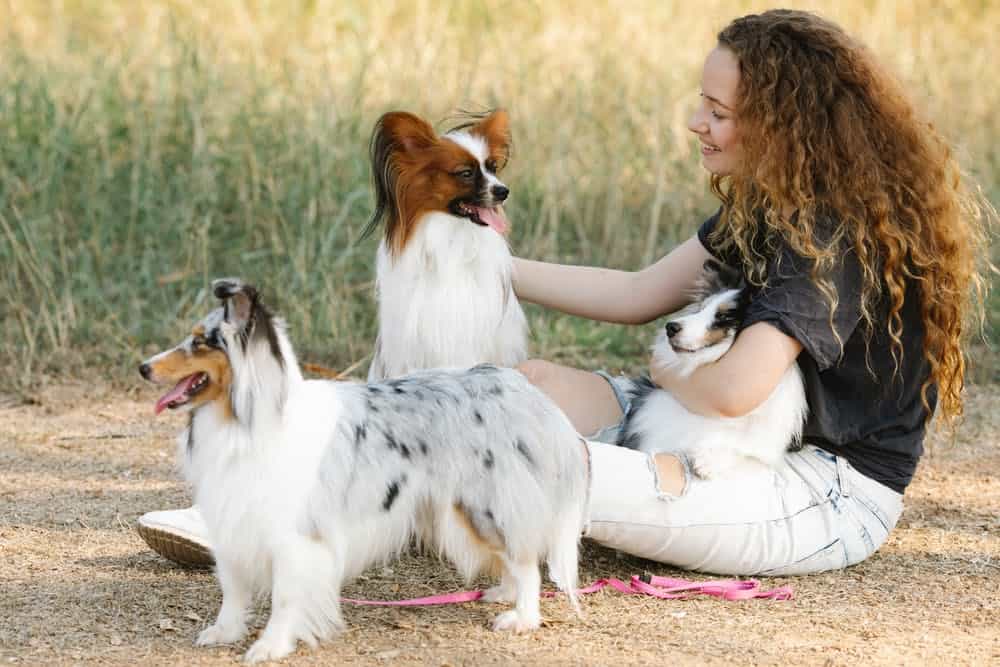
Having a dog in the family can help a young child with its emotional development and empathy. It can help with speech development and speech difficulties. The child can learn about caring for another being and about responsibility. Children may feel safer and protected with a dog ‘brother/sister’. 

For some older children, dogs can prevent social isolation, they can be an accepting, loyal and non-judgemental companion. This unconditional love can be particularly stabilising and reassuring for teenagers and children with additional needs and disabilities. Therapy dogs can also be extremely beneficial. There are many fantastic charities providing this kind of support. 

It is, of course, crucial to supervise the interactions of children and dogs and to educate the child. Statistically children are much more likely to get bitten by a dog than an adult is, mainly because they are less likely to read the dog’s body language and adapt their behaviour accordingly.
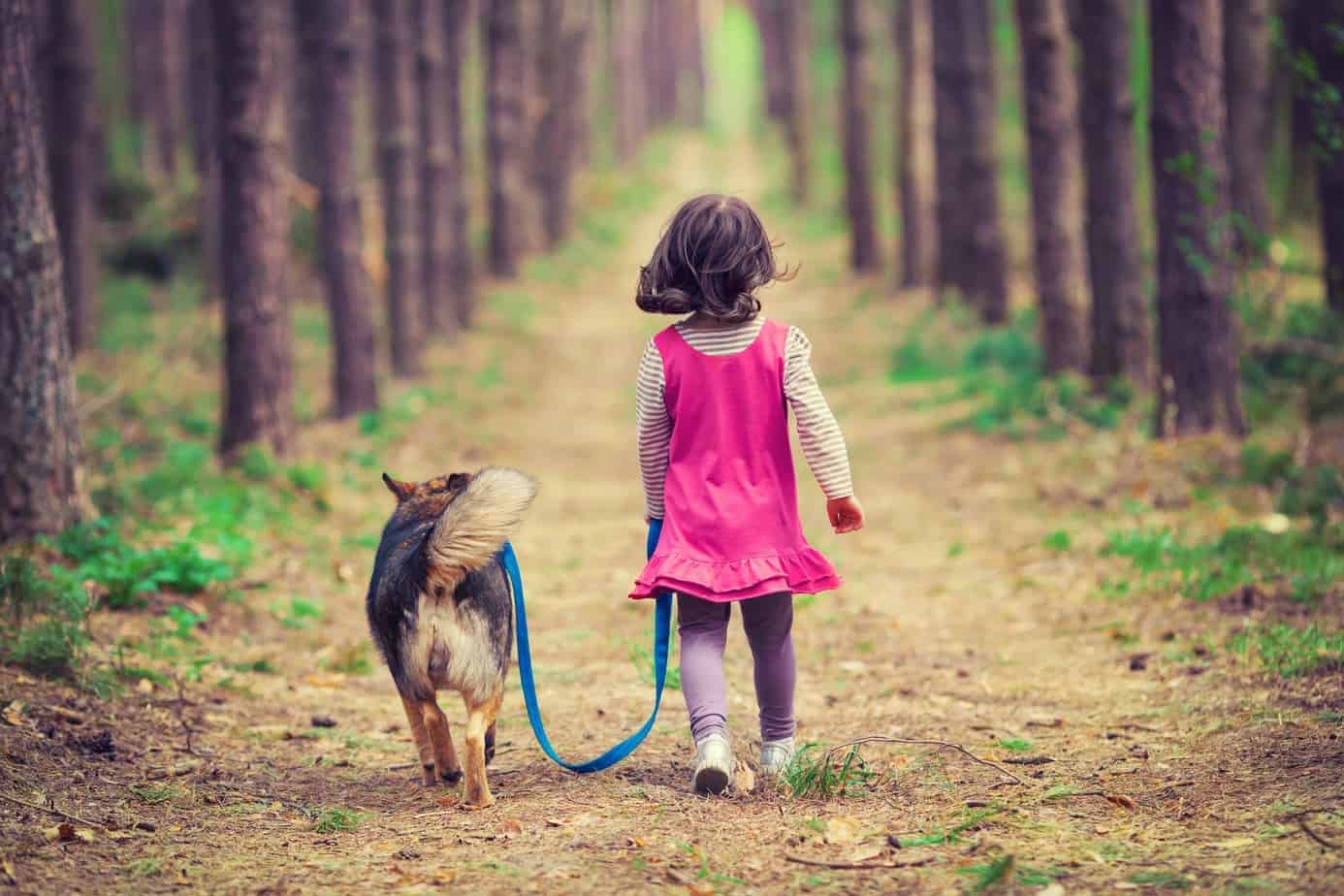
In our workshops we talk about the importance of recognising signs of stress in dogs (including teaching any children in the family). Sometimes, teaching first aid is as much about prevention as it is about treatment. You need to be able to safely treat a dog that is likely to be frightened and in pain – you need to understand their body language because they can’t tell you verbally. 

It’s also important to keep your dog under control around unknown children. A frightening experience around a dog can cause long-term anxiety in children, often extending into adulthood and sometimes even lasting a lifetime.

Debby Lucken, founder of Kids Around Dogs says this:

“Often, people have an image of their dog being a constant companion to their children and some parents believe the dogs love all sorts of attention and behaviours from the kids, however this is not the case. 

While many dogs endure very well certain ways of being handled, some high level of noise and so on, others are not as tolerant and if we keep pushing dogs over their limits, just like it might happen to humans, they might react negatively.

Dogs use their body to communicate their feelings, may those be happy, sad or angry ones. We ought to learn and understand the way dogs communicate with us in order to lead and to give them a better, safer and happier life.”
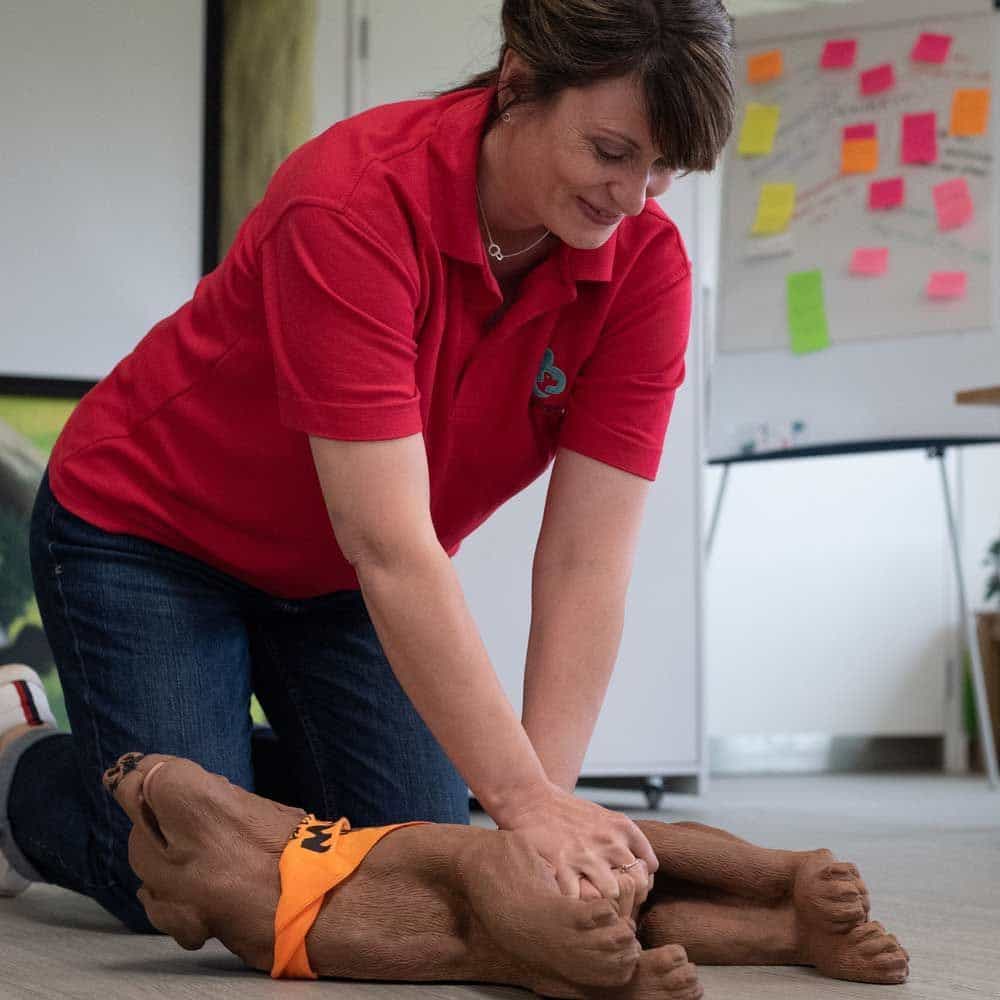
From a first aid perspective: I strongly believe that every dog owner and professional should have first aid training. I’ve written other blogs and articles about how and why this is important. In summary: you can’t call an ambulance for a dog, you might not have time to get to a vet (e.g. choking, arterial bleed) and the actions you need to take may be different from what you would use on a human (e.g. choking, CPR). In fact, under the Animal Welfare Act 2006 we have a duty of care to our animals, to do our best to minimise pain and suffering and to prevent injury.

As mentioned earlier, with dog ownership comes responsibility and, although the adults in the family will have ultimate responsibility for the dog’s welfare needs, there’s no reason why the children can’t be involved in this too. It can actually be really empowering to feel that you would know what to do in an emergency. Whether adult or child, for someone who struggles with their mental health, learning skills that can make them feel more in control and more confident has got to be a positive thing.
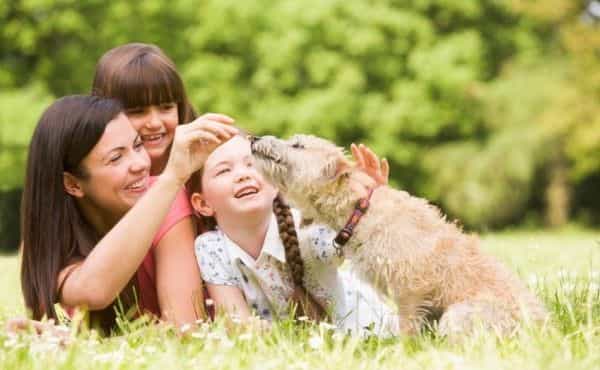
Our dog first aid training is open to children as well as adults. The content may not be suitable for young children (under 12s) if they are particularly sensitive so we ask that they be accompanied by an adult and parents will need to sign a disclaimer for under 16s, but there is no particularly graphic content. 

We try to make the training as inclusive as possible. Guide dogs and interpreters are always welcome. Class sizes are restricted to 30 and usually in large halls where seating can be spread out as necessary. It’s also informal, relaxed and friendly. You can take a break when you need to, ask as many questions as you like, bring cushions and blankets and whatever you need to feel comfortable. If you’d prefer to do the training online then that’s also possible – We run regular online sessions too. 

Dog First Aid Training offer the Continued Professional Development (CPD) accredited Emergency Canine Care™ (ECC) course. The course is written by vets and is regularly updated. Examples of the life-saving skills and knowledge you can gain from a canine first aid course include CPR, choking, GDV/bloat, shock, bleeding, seizures, heat stroke, burns and scalds, toxic ingestion and road accidents.

Written by:
Kathy Hobson
Kathy Hobson
Franchise Partner

Kathy Hobson is our Franchise Partner for Sussex. You can contact her by phone on 07498 557064 or by email at kathy.hobson@dog-first-aid.com

Published by Dog First Aid: , updated: 

The Derveni Papyrus: the Oldest Book in Europe? by Bipin Dimri

 Almost all of what was written throughout human history has been lost. The further back we travel in time from the present day, the more has gone missing. Eventually, the fact that anything survived at all becomes remarkable.


So it is with the Derveni papyrus, an ancient Macedonian papyrus roll first rediscovered in 1962. It is a philosophical treatise written in the circle of the philosopher Anaxagoras as an allegorical commentary on an Orphic lyric, a theosophical text about the origin of the gods.

But what makes the papyrus so special is that it is Europe’s oldest surviving text. Furthermore, it was written around 340 BC, during the reign of Philip II of Macedon, the father of Alexander the Great. The poem was written near the end of the 5th century BC, and it is unquestionably the most important textual find of the 20th century in what it can tell us.

It provides a unique insight into the world of almost 2,500 years ago, the disciplines of Greek religion and western philosophical thought that developed from it, the sophistic movement, early philosophy, and the foundations of literary criticism. It offers an alternative to Socratic wisdom which it predates, and demonstrates universal human constants in needing to understand the world, cooperate with our fellow humans, and face death in sorrow.

So, what does it have to say?

Where Does the Derveni Papyrus Come From?

The roll was discovered on January 15, 1962, on the road from Thessaloniki to Kavala in Derveni, in Macedonian Greece. The location is a nobleman’s grave in a necropolis that was once part of a large cemetery in the historic city of Lete.

It is the oldest surviving manuscript in the Western tradition, as well as the only ancient papyrus known to have been discovered in Greece. Regardless of location, it could also be the oldest extant papyrus written in Greek.

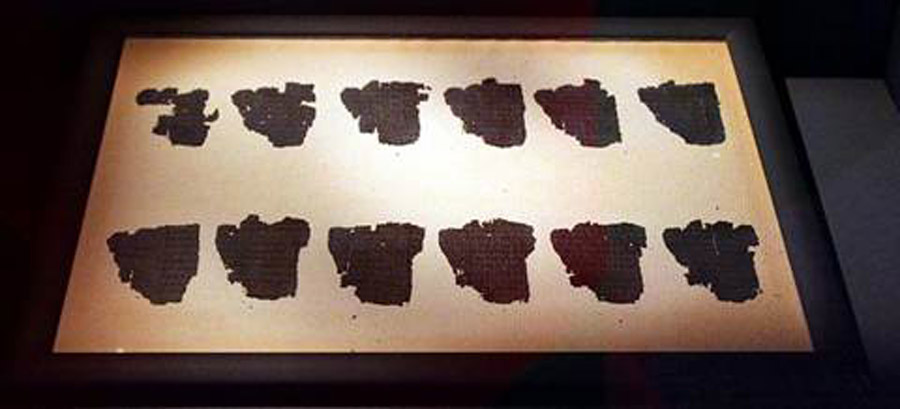
The Derveni Papyrus (Fkitselis / CC BY-SA 3.0)

The papyrus text comprises a mixture of dialects, mostly consisting of three forms of Greek: Attic, Ionic and occasionally Doric. The texts overlap slightly between the three dialects, and there are phrases and terms which are repeatedly on more than one language, with several variations.

The top sections of the damaged papyrus scroll and fragments were retrieved from ashes atop the tomb slabs by archaeologists Petros Themelis and Maria Siganidou; the lower parts had burned away in the funeral fire. The scroll was painstakingly unrolled, and the fragments were reassembled to form 26 columns of text. 

Because it was carbonized (and hence dried) in the nobleman’s funeral pyre, it survived in the damp Greek soil, which is ordinarily unsuitable for papyri preservation. However, the papyrus itself was still very difficult to read for several reasons.

Both the ink used and the background to the paper is black, which makes deciphering individual words a slow and painstaking process. Furthermore, it exists in the form of 266 fragments, which are conserved beneath glass in Thessaloniki’s Archaeological Museum. The fragments are held in descending order of size and have had to be meticulously rebuilt, and many smaller fragments are yet to be placed.

What Is Written On It?

The majority of the text is a commentary on a hexameter poem attributed to Orpheus that was utilized during initiations into the mystery cult of Dionysus. On the papyrus the poetry’s fragments are quoted, followed by interpretations by the text’s main author, who tries to illustrate that the poem doesn’t mean what it says literally.

“Close the doors, you uninitiated,” begins the poem, a renowned warning to privacy also referenced by Plato. According to the ancient commentator, this proves that Orpheus created his lyric as an allegory.

Nyx (Night) gives birth to Uranus (Sky), who becomes the first monarch, according to the poem’s narrative. Kronos succeeds Uranus as ruler, but he, too, is followed by Zeus, whose dominion over the entire universe is praised.

Zeus draws some of his authority and power by hearing oracles from Nyx’s sanctuary, who tell him of the future and allow him to be forewarned.  Zeus rapes his mother Rhea at the end of the book, which, according to the Orphic theogony, will result in the birth of Demeter.

Zeus would then have raped Demeter, giving birth to Persephone, who would eventually marry Dionysus, a clear break from the mainstream tradition where she marries Hades. This part of the story, however, must have continued in a second roll that has since been lost.

Orpheus, according to the poem’s translator, did not intend any of these episodes to be literal, but rather allegorical. The text’s initial surviving columns are less well preserved, but they discuss occult rituals like sacrifices to the Erinyes (Furies), how to get rid of demons that have become a problem, and spells.

They incorporate quotes from Heraclitus, the Greek philosopher. Even the arrangement of the fragments is questioned, making their restoration exceedingly contentious. Valeria Piano and Richard Janko, who notes elsewhere that he has discovered that these columns also include a passage from the philosopher Parmenides, have lately given two different reconstructions. 

A Window Into Ancient Thinking?

In this text we therefore have an ancient tradition, the initiation into a mystery cult, and a contemporary reading and criticism of the text. There’s a lot here for philosophers to learn about Greek religion, papyrus studies, and, most importantly, the fluidity and interconnectedness between philosophy and theology, science, and superstition in ancient Greek society.

The Derveni papyrus is a fascinating new Greek literary document. It is possibly the only papyrus ever discovered on Greek territory, and if not the oldest Greek papyrus ever discovered, it is certainly the oldest literary papyrus, dating from around 340 to 320 BC.

Sadly, given the unusual context of its preservation and the damage done to papyrus by European soils, it is likely that there will be no others. It was only chance that this single manuscript survived to offer us an insight into the thinking before Socrates and Plato.

Top Image: What can the Derveni papyrus tell us about ancient Greece? Source: Shaiith / Adobe Stock.

By Bipin Dimri

References

Wikipedia, 2022. Derveni papyrus. Available at: https://en.wikipedia.org/wiki/Derveni_papyrus

Betegh, G, 2004. The Derveni Papyrus: Cosmology, Theology and Interpretation. Available at: https://ndpr.nd.edu/reviews/the-derveni-papyrus-cosmology-theology-and-interpretation/

Muellner, L, Nagy, G, Papadopoulou, I, 2020. The Derveni Papyrus: An Interdisciplinary Research Project. Available at: https://chs.harvard.edu/derveni-papyrus-introduction/

https://www.historicmysteries.com/derveni-papyrus/?fbclid=IwAR2PTUO2S7KgalFRRfnV3Gbqj7lETsEXND82Cwo6VjhIjYVvKj1_UipGAaY


Chocolate Muffins


Ingredients

  • 115 g unsalted butter
  • 250 g caster sugar
  • 2 medium eggs
  • 225 g self raising flour
  • 25 g cocoa powder
  • pinch of salt
  • 125 ml full-fat milk
  • 75 g dark chocolate chips
  • 75 g milk chocolate chips
  • 75 g white chocolate chips

Instructions

  • Preheat your oven to 190ºc/170ºfan, and line a muffin tray with 12 cases. 
  • Beat the butter and sugar together until light and fluffy
  • Add the eggs and beat again
  • Add the self raising flour, cocoa powder, and salt and beat again.
  • Finally, pour in the milk and beat until combined.
  • Add the chocolate chips in, and fold. 
  • Spoon the mixture into the cases evenly, and bake in the oven for 25 minutes or so. 
  • Once baked, leave to cool slightly and then gobble up. 


https://www.janespatisserie.com/2015/01/12/triple-chocolate-chip-muffins/


Classic sponge sandwich


I used lemon curd with buttercream as an alternative


Ingredients

For the filling

Method

  • STEP 1

    Heat oven to 180C/fan 160C/gas 4. Grease and base-line 2 x 20cm non-stick round sandwich tins with baking parchment, then lightly grease the parchment. Sift the flour and baking powder into a large bowl, then tip in all the other sponge ingredients. Using an electric whisk, beat everything together until smooth. Divide the mix between the cake tins, then bake for 20-25 mins until cooked and golden. When cool enough to handle, remove the cakes from the tins, then leave to cool completely on a rack.

  • STEP 2

    To make the filling, whip the cream with the caster sugar and vanilla until it holds its shape. Build the cake by spreading one sponge with jam and the other with cream. Sandwich the whole thing together, then dust with icing sugar.

Monday, 6 February 2023

No Waiting Room


NO WAITING ROOM
What if you didn’t wake up tomorrow and your soul is watching down thinking of all the things you didn’t get to do yet because you were too scared, or too shy, or too worried about money.
And all the things you told yourself you weren’t good enough for, swam in front of your eyes, fighting for a place in the line, beside the words you didn’t say and the joy you forgot to have.
My friend, there is absolutely no room for anything in your day, other than acceptance.
You will never have enough money, or time, and you will certainly never have that perfect body the world told you you need, to be happy.
And before you say it’s too late to embrace this thing we call life, no it is not.
You can do it right where you are. Right this minute.
Get outside, breathe, look at the trees, put your bare feet on the grass - hand on your heart to feel that pulse - and that’s it.
You’re living.
Keep that up.
Wait up for the moon sometimes or get up early to see a sunrise, just because you can.
Jump in the lake. Run, skip.
The things you need to feel alive are free and all around my friend.
You just have to see them.
Let in opportunity and say yes to the invitations that scare you a little, in a good way.
Say no to some of the things you force yourself to do, knowing they rinse you of your peace.
Life was never supposed to be a waiting room, it was supposed to be a hillside, with paths leading in every direction and mountains as far as the eye can see, hiding adventures and new friends behind them.
Don’t let yourself get to the end of this ride without having stopped to smell those beautiful roses.
That’s the only thing you need to fear in this life.
Everything else is all part of it.
It’s all just a messy, complicated, beautiful and terrifying part of it.
Chin up, throw your arms wide open
and let it be so.
Donna Ashworth
From my poetry book ‘LIFE’: https://amzn.eu/d/9Y6E6kz