
Saturday, 4 January 2020

Elderberry Syrup

Elderberry Syrup
Yield: ~1¾ cups
This easy-to-make syrup is my go-to remedy for fighting colds and flu, and it's less expensive (and better tasting!) than conventional medicines. For best relief, take it at first sign of a virus. A daily dose may also be taken as a preventative measure.


INGREDIENTS

½ cup (2 ounces/55 grams) dried elderberries (see notes for buying)
3 cups (24 ounces) water
1 tablespoon minced fresh ginger (optional but recommended)
1 teaspoon dried whole cloves (optional; I measure a slightly scant teaspoon)
1 cinnamon stick (optional)
½ cup (160 grams) raw honey


INSTRUCTIONS

Bring the elderberries, water and spices to a boil in a medium-size pot, and then lower the heat and allow the mixture to simmer, uncovered, until the water has been reduced by half, about 20-25 minutes. (Tip: For those who have trouble eyeballing how much liquid has reduced, this is a great time to use a scale. Simply weigh the full pot before boiling and then again when you’re getting close. Look for the weight to be 12 ounces less than the starting point. If not using a scale, observe the starting level of the liquid in the pot, but don’t worry about being exact. It won’t matter if you’re a little off either way.)
Pour the cooked berries and liquid through a fine mesh strainer and into a clean bowl to remove the berry skins and spices. To extract all of the juice, press the berries into the side of the strainer with the back of a spoon. Discard the remaining pulp.
To preserve the benefits of the honey, allow the mixture to cool to room temperature, and then stir in the honey, whisking to fully blend. Transfer the syrup to a jar and refrigerate. The syrup will keep for approximately 3 weeks, and it may be frozen if you don’t think you’ll use it all within that timeframe.

Suggested Use: Take 1-2 teaspoons every 3-4 hours at the first sign of a cold or virus. May also take a 1-2 teaspoons once a day as a preventative measure.

Friday, 3 January 2020

Welsh reservoirs

The drowning of rural Welsh valleys in order to provide English cities with water, often by compulsory purchase and without compensation, is a controversial subject which over the years has led to many protests.
On 2nd January 1982, The Welsh Army of Workers claimed responsibility for a bomb explosion at the Birmingham headquarters of the Severn Trent Water Authority. An hour later a second bomb was found and defused at the main complex of the International Development Corporation (IDC) in Stratford-upon-Avon. No one was hurt by the bombings, which were part of a campaign for local authorities from Birmingham and the West Midlands to pay for the water they receive from the Elan Valley reservoirs.
1880's - Lake Vyrnwy in Montgomeryshire was the first reservoir in Wales and at the time, it was the biggest man-made lake in the world. It was built to supply water to Liverpool and Merseyside and involved flooding the head of the Vyrnwy valley and submerging the small village of Llanwddyn.
1890s - The City of Birmingham Corporation bought 180km² of land in the Elan and Claerwen valleys in Powys, as there was an increasing demand for water in Birmingham for public health reasons and for industry.
1904 - The Elan Valley reservoir was opened to supply water to the City of Birmingham. The three dams opened there were - Craig Goch, Pen y Garreg and Caban Coch, with a surface area of 500 acres.
1907 - Llyn Alwen near Betws y Coed was constructed by the Wirral Water Board.to provide 9 million tonnes of water per day to Birkenhead.
1923 - Welsh MP's prevented the Corporation of Warrington drowning the Ceiriog valley near Wrexham.
1952 - Claerwen reservoir and dam in Elan Valley was opened and the area was leased by the Midlands for 999 years for a sum of 5 pence a year. It provides 75 tonnes of water per day.
1965 - Consruction of the Llyn Celyn reservoir in Gwynedd involved the drowning of the village of Capel Celyn, to supply water to Liverpool
1967 - Llyn Clywedog near Llanidloes was built to supply water to Birmingham and the English Midlands, following an Act of Parliament ordering its creation, despite strong local opposition.


ANTHONY BOURDAIN QUOTES THAT WILL INSPIRE YOU

Few people have touched hearts and minds like Anthony Bourdain, chef, author, and world traveler. I know I’m not alone when I say that I miss him—his wit, his wisdom, his honesty, his generosity, his unfailing kindness—but the impact of his life on mine and the world over still goes on. And in that vein, I hope these Anthony Bourdain quotes will inspire you to travel more, eat bravely, and live a life with no reservations.

ANTHONY BOURDAIN QUOTES ABOUT TRAVEL

“Do we really want to travel in hermetically sealed popemobiles through the rural provinces of France, Mexico and the Far East, eating only in Hard Rock Cafés and McDonalds? Or do we want to eat without fear, tearing into the local stew, the humble taqueria’s mystery meat, the sincerely offered gift of a lightly grilled fish head? I know what I want. I want it all. I want to try everything once.” —Kitchen Confidential: Adventures in the Culinary Underbelly
“Travel changes you. As you move through this life and this world you change things slightly, you leave marks behind, however small. And in return, life—and travel—leaves marks on you. Most of the time, those marks —on your body or on your heart—are beautiful. Often, though, they hurt.” —The Nasty Bits: Collected Varietal Cuts, Usable Trim, Scraps, and Bones

“If you’re twenty-two, physically fit, hungry to learn and be better, I urge you to travel—as far and as widely as possible. Sleep on floors if you have to. Find out how other people live and eat and cook. Learn from them— wherever you go.” —Medium Raw: A Bloody Valentine to the World of Food and the People Who Cook
“Travel isn’t always pretty. It isn’t always comfortable. Sometimes it hurts, it even breaks your heart. But that’s okay. The journey changes you; it should change you. It leaves marks on your memory, on your consciousness, on your heart, and on your body. You take something with you. Hopefully, you leave something good behind.” —No Reservations: Around the World on an Empty Stomach

“The journey is part of the experience—an expression of the seriousness of one’s intent. One doesn’t take the A train to Mecca.” —A Cook’s Tour: Global Adventures in Extreme Cuisines

“It’s an irritating reality that many places and events defy description. Angkor Wat and Machu Picchu, for instance, seem to demand silence, like a love affair you can never talk about. For a while after, you fumble for words, trying vainly to assemble a private narrative, an explanation, a comfortable way to frame where you’ve been and what’s happened. In the end, you’re just happy you were there—with your eyes open—and lived to see it.” —The Nasty Bits: Collected Varietal Cuts, Usable Trim, Scraps, and Bones

ANTHONY BOURDAIN QUOTES ABOUT FOOD

“Good food is very often, even most often, simple food.” —Kitchen Confidential

“Food, it appeared, could be important. It could be an event. It had secrets.” —Kitchen Confidential

“I’ve long believed that good food, good eating, is all about risk. Whether we’re talking about unpasteurized Stilton, raw oysters or working for organized crime ‘associates,’ food, for me, has always been an adventure” —Kitchen Confidential

“Don’t touch my dick, don’t touch my knife.” —Kitchen Confidential

“Your body is not a temple, it’s an amusement park. Enjoy the ride.” —Kitchen Confidential

“An ounce of sauce covers a multitude of sins.” —Kitchen Confidential

“Toast your goddamn muffins.” —Appetites: A Cookbook

“People confuse me. Food doesn’t.” —Kitchen Confidential

ANTHONY BOURDAIN QUOTES ABOUT LIFE

“I am not a fan of people who abuse service staff. In fact, I find it intolerable. It’s an unpardonable sin as far as I’m concerned, taking out personal business or some other kind of dissatisfaction on a waiter or busboy.” —Medium Raw: A Bloody Valentine to the World of Food and the People Who Cook

“Skills can be taught. Character you either have or you don’t have.” —Kitchen Confidential

“It’s very rarely a good career move to have a conscience.” —Medium Raw: A Bloody Valentine to the World of Food and the People Who Cook

“Don’t lie about it. You made a mistake. Admit it and move on. Just don’t do it again. Ever.” —Kitchen Confidential

“And I’m not going to tell you here how to live your life. I’m just saying, I guess, that I got very lucky. And luck is not a business model.” —Medium Raw: A Bloody Valentine to the World of Food and the People Who Cook

Hungry for more of Anthony Bourdain’s trademark brand of keen insight and snark? Check out The Essential Anthony Bourdain Reading List.

Happy New Year


“Be at war with your vices, at peace with your neighbors, and let every new year find you a better man.”
― Benjamin Franklin

Thursday, 2 January 2020

The Secret Alley Full Of Curious Old Bookshops • Cecil Court

Cecil Court in the snow

Nicknamed Bookseller’s Row, Cecil Court is a hidden gem in the heart of central London.

Packed with twenty-odd secondhand bookshops and antiquarian booksellers, it truly is a paradise for literature lovers. Just moments away from the hustle and bustle of Leicester Square, you’ll be surprised to stumble across such a peaceful gem. The shop fronts haven’t changed for over a century, so a walk through Cecil Court is like a trip back in time. (Header image: @frankie.andrea)
Cecil Court Bookshop Window
Photo: @amybucklesbookshelf
Inside the stores, you’ll find anything from rare books, collector’s copies and first-editions, to old stamps, maps, posters and banknotes. It’s thought to be the thoroughfare that inspired Harry Potter’s Diagon Alley and, with its eccentric shops—some of which are even associated with magical or psychic literature—it’s easy to believe.
Cecil Court Diagon Alley
Photo: @annathegryffindor
One very fun fact about Cecil Court is that it was the temporary home of Wolfgang Amadeus Mozart while he was touring Europe at the age of eight. The Mozart family stayed with a barber named John Couzin, and tickets for Mozart’s first London concerts were sold from his shop. There’s even a blue plaque to commemorate his very brief tenancy, because us Londoners love a cheeky claim to fame. Some say that it was while he was staying at Cecil Court that he composed his first symphony, but we’ll never know for sure.
Cecil Court Victoria Alley
Photo: @achilleauris
Importantly, Cecil Court was also the business centre of the early British film industry, and therefore earned itself the second nickname, Flicker Alley. The first film-related company opened in 1897, and Cecil Court quickly became known as the place to buy or hire films. Pioneers of early British cinema Cecil Hepworth and James Williamson had offices on the street, alongside many international companies. During this time, all sorts of businesses opened along the alley; from equipment shops and rental companies, to foreign film dealers and companies specialising in cinema confectionery.
You’ll find Cecil Court just off Charing Cross Road, leading to St Martin’s Lane. Shops tend to open from about 10:30am until about 5:30pm, but this will vary. 

Wednesday, 1 January 2020

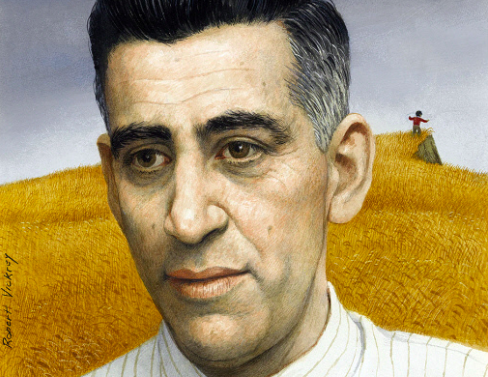
10 Magical, Sweet Quotes by J.D. Salinger on his Birthday

“She wasn’t doing a thing that I could see, except standing on the balcony railing, holding the universe together.”
“Don’t ever tell anybody anything. If you do, you start missing everybody.”
“Certain things, they should stay the way they are. You ought to be able to stick them in one of those big glass cases and just leave them alone.”
“I was about half in love with her by the time we sat down. That’s the thing about girls. Every time they do something pretty…you fall half in love with them, and then you never know where the hell you are.”
 “An artist’s only concern is to shoot for some kind of perfection, and on his own terms, not anyone else’s.”
“I can’t explain what I mean. And even if I could, I’m not sure I’d feel like it.”
“Make sure you marry someone who laughs at the same things you do.”
“It was that kind of a crazy afternoon, terrifically cold, and no sun out or anything, and you feel like you were disappearing every time you crossed the road.”
“Poets are always taking the weather so personally. They’re always sticking their emotions in things that have no emotion.”
“If Death stepped miraculously through the glass and came in after you, in all probability you just got up and went along with him, ferociously but quietly.”